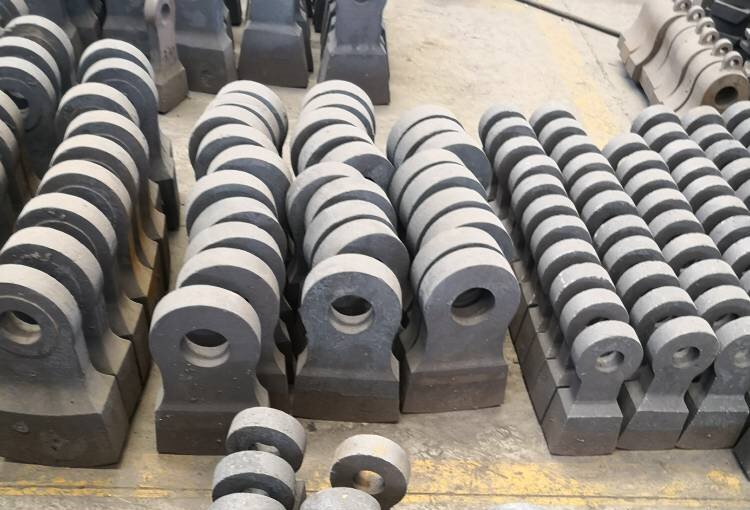
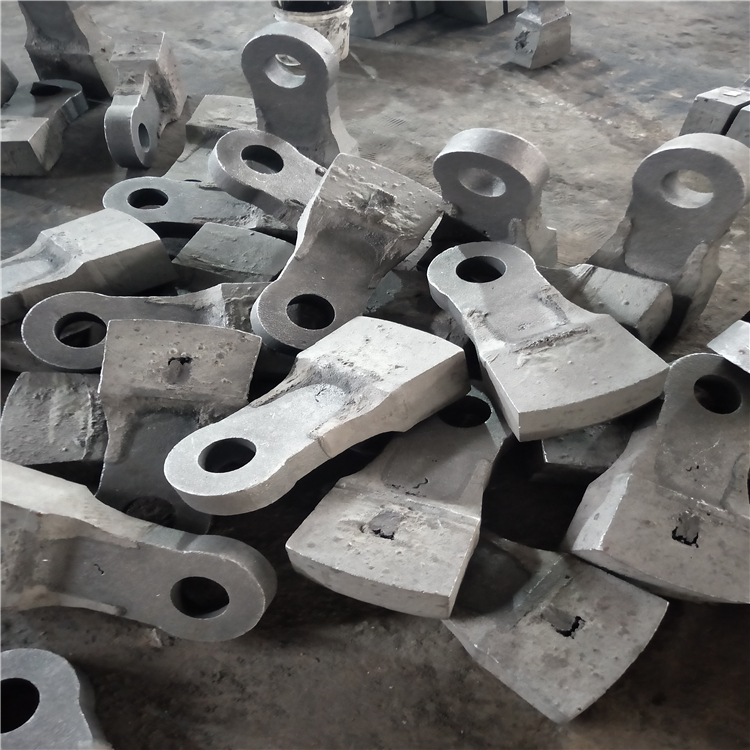
How to Choose Crusher Hammers for Limestone Crushing: A Complete Guide

1. Introduction: Why Your Crusher Hammer Selection Dictates Quarry Profitability
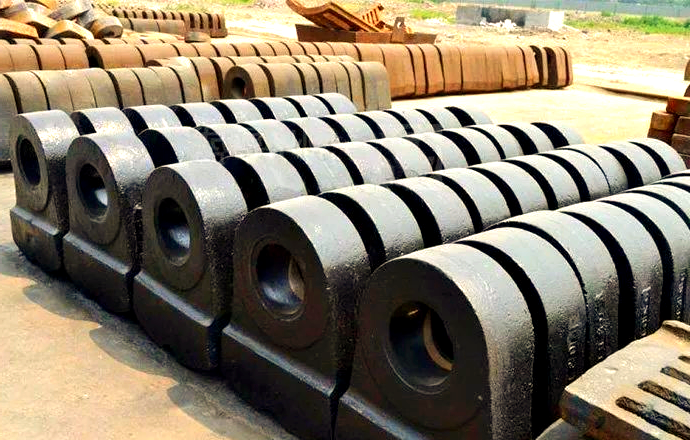
In limestone processing, the crusher hammer is the ultimate frontline component. Operating inside heavy-duty hammer mills and impactors, these wear parts endure continuous, high-velocity collisions to reduce run-of-mine limestone into sized aggregate, aglime, or cement feedstock.
However, there is no “one-size-fits-all” crusher hammer. Selecting the wrong material or geometry doesn’t just accelerate wear—it risks catastrophic hammer breakage, devastating rotor damage, and costly unplanned production downtime.
To optimize your crushing efficiency and lower your cost-per-ton, you must balance two conflicting mechanical properties: Hardness (resistance to abrasive wear) and Toughness (resistance to impact fracturing). This complete guide breaks down exactly how to evaluate your limestone and choose the perfect crusher hammer for your operations.
2. Evaluate Your Raw Material: The Limestone Matrix
Before purchasing any replacement crusher hammers, you must look closely at the specific geological profile of your quarry’s limestone. “Limestone” ranges wildly from soft, non-abrasive chalk to highly abrasive, silica-rich stone.
Silica Content (SiO2): This is the ultimate hammer killer. Standard limestone is relatively soft, but if your deposit contains flint, chert, or quartz seams resulting in a silica content greater than 2%, your crusher hammer will experience severe abrasive wear.
Moisture Levels: High moisture (>5%) causes fines to stick to the grates, creating a clogging effect. This leads to secondary attrition, where the crusher hammer repeatedly hits cushioned material, accelerating localized wear.
Maximum Feed Size: Large, heavy feed blocks require massive impact energy to fracture. If your primary crushing stage takes in material up to 40 inches, your hammers must prioritize structural toughness over pure hardness to avoid cracking.
3. Crusher Hammer Material Comparison Matrix
Different chemical compositions offer distinct metallurgical advantages. Use the reference table below to see how standard industry materials stack up for limestone applications.
| Material Type | Typical Hardness | Impact Toughness | Best Suited For |
| High Manganese Steel (Mn13, Mn18) | HB 200–220 (Spikes to HB 500+ under work-hardening) | Excellent | Primary crushing, large feed sizes, low-silica limestone. |
| Alloy Steel (Cr-Mo / Ni-Cr) | HRC 50–60 | Good | Medium-scale crushing, stable intermediate impact conditions. |
| High Chromium Cast Iron (Cr20–Cr26) | HRC 60–65 | Poor (Brittle) | Fine crushing (Aglime), secondary/tertiary stages, high-silica feed. |
| Bimetallic Composite / Ceramic Inserts | HRC 62+ (Working face) | Excellent (Via tough structural shank) | Severe abrasion combined with high impact, high-moisture sticky conditions. |

4. Deep-Dive: Choosing the Right Material for Your Conditions
A. High Manganese Steel Crusher Hammers
Traditional high manganese steel (Mn13 or Mn18) relies on a unique metallurgical trait: work-hardening. In its initial state, the alloy is relatively soft and highly ductile. However, when subjected to severe, repeated impact shocks, the surface molecular structure transforms, rapidly hardening to resist abrasion while the internal core remains tough and shock-absorbent.
Critical SEO Note: Manganese steel requires high impact to harden. If you are feeding small, soft limestone particles, the hammer will never work-hardened properly, causing it to wear out prematurely.
B. High Chromium Cast Iron Hammers
For secondary and tertiary stages where the limestone has already been sized down, high-chrome crusher hammers offer unmatched abrasive wear life—often lasting 2 to 3 times longer than standard manganese. Because it features massive chromium carbide networks, it shrugs off silica scratching.
The Catch: High-chrome is highly brittle. If a piece of uncrushable tramp iron or an oversized boulder enters the chamber, high-chrome hammers are prone to catastrophic shattering.
C. Bimetallic Composite Hammers: The Modern Solution
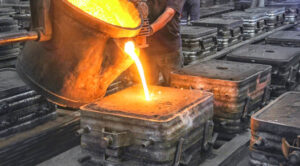
To circumvent the hardness-vs-toughness trade-off, modern casting techniques utilize a bimetallic liquid-hot composite process.
1.Cast the Tough Shank:Phase 1。
The upper mounting portion (the shank) is cast from high-toughness alloy or structural steel to absorb intense rotor vibrations and prevent eye-hole cracking.
2.Introduce High-Chrome Head:Phase 2。
The high-wear striking face is cast simultaneously using ultra-hard high-chromium cast iron or reinforced with embedded titanium carbide (TiC) ceramic inserts.
3.Metallurgical Bonding:Phase 3。
The two liquid metals fuse seamlessly at the junction point inside the mold, creating a single crusher hammer that features maximum wear resistance at the face and total fracture protection at the pin.
5. Geometric and Mechanical Factors to Consider
Beyond metallurgy, structural configurations drastically impact how efficiently your hammer mills perform:
Weight Matching and Rotor Balance: When replacing a crusher hammer set, they must be weight-matched in opposing pairs across the rotor axis. An unbalanced rotor causes severe high-frequency vibrations that destroy bearings and crack the main rotor shaft.
Hammer Design (One-piece vs. Reversible): Reversible crusher hammers allow you to flip the part 180 degrees once the primary leading edge rounds off, effectively doubling the wear life of the component before requiring a complete melt-and-recast lifecycle.
Penetration Profiles: For primary stages, choose a hammer setup that allows deep penetration into the material bed (e.g., a “2 low, 2 high” configuration on the rotor rows). For producing fine aggregate or aglime, a continuous “4 high” layout creates maximum attrition and higher fines output.
6. Proactive Maintenance Tips to Extend Crusher Hammer Life
To squeeze every ounce of value out of your wear parts investment, implement these industry best practices:
Bypass Fines Early: Utilize a heavy-duty grizzly feeder or vibrating screen before the crusher intake. Removing natural fines and dirt ahead of time prevents the hammers from needlessly grinding small material, extending your crusher hammer lifespan by up to 20%.
Regulate Your Feed Rate: Uneven, surge-style feeding overloads specific zones of the rotor, leading to localized wear and uneven hammer profiles. Aim for a continuous, evenly distributed stream across the entire width of the crusher inlet.
Daily Visual Inspections: Check your hammer profiles daily. Catching a rounded edge early allows for timely rotation or built-up hardfacing welding before the structural integrity of the hammer shank is permanently compromised.
Common Mistakes When Selecting Crusher Hammers
Many users make mistakes when selecting crusher hammers, which leads to poor performance and short service life.
Common mistakes include:
- Using high chromium hammer in high-impact conditions (risk of cracking)
- Choosing low-cost alloy steel hammers (short service life)
- Ignoring material hardness of limestone
- Not matching hammer type with crusher model
Avoiding these mistakes can greatly improve production efficiency.
How to Extend Service Life of Crusher Hammers
To maximize hammer life in limestone crushing, proper operation and maintenance are essential.
Effective methods include:
- Selecting the correct material for the application
- Ensuring proper installation and rotor balance
- Controlling feeding size and avoiding oversized material
- Maintaining stable and uniform feeding
- Performing regular inspection and replacement
Proper operation can significantly extend hammer service life and reduce cost per ton.
Applications in Limestone Crushing Industry
Crusher hammers for limestone are widely used in multiple industries:
Cement Plants 
Used for raw material limestone crushing in cement production lines.
Quarry and Aggregate Industry
Used in stone crushing plants for aggregate production.
Lime Production Plants
Used in limestone processing for quicklime and hydrated lime production.
Recommended Crusher Hammer Solutions
Based on different working conditions, we recommend:
- Standard Solution: Mn13Cr2 High Manganese Steel Hammer
- High Efficiency Solution: Mn18Cr2 Hammer for improved wear resistance
- Premium Solution: Bimetal Composite Hammer for long-term operation
We can also provide customized solutions based on your crusher model and working conditions.
Why Choosing the Right Supplier Matters
Besides material selection, the manufacturer also plays a key role in hammer performance.
A professional supplier ensures:
- Stable raw material quality
- Proper heat treatment process
- Accurate machining and balancing
- OEM customization service
- Reliable delivery time
High-quality manufacturing directly affects hammer lifespan and crushing efficiency.
FAQ
Q1: What is the best material for limestone crusher hammers?
High manganese steel and bimetal composite hammers are most commonly used for limestone crushing.
Q2: How long do crusher hammers last?
Service life depends on material, crusher type, and working conditions, usually from several weeks to several months.
Q3: Can crusher hammers be customized?
Yes, we provide OEM customization based on drawings or crusher models.
Q4: What causes crusher hammer fast wear?
Improper material selection, oversized feed, and high impact conditions are main causes.
Q5: Which crushers use hammers?
Hammer crushers, heavy hammer crushers, and impact hammer mills.
Q6: Do you provide OEM service?
Yes, we provide full OEM and customized production services.
Conclusion
Choosing the right crusher hammers for limestone crushing is essential for improving production efficiency and reducing operating costs.
Material selection, working conditions, and crusher type all play important roles in hammer performance. By selecting the correct hammer solution, you can significantly extend service life and reduce downtime.
If you are looking for professional solutions for limestone crushing applications, we can provide customized crusher hammer designs based on your requirements.
Call to Action
Contact us today:
Email: [john@crusherwearpartspro.com]
WhatsApp: [+86-15057941949]
Website: https://crusherwearpartspro.com/
Get In Touch – Let’s optimize your crushing performance together!