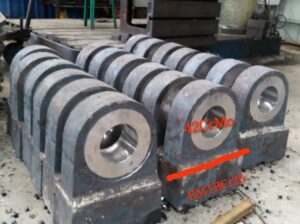
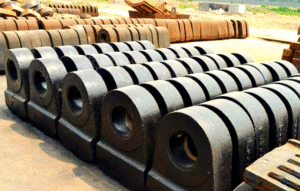
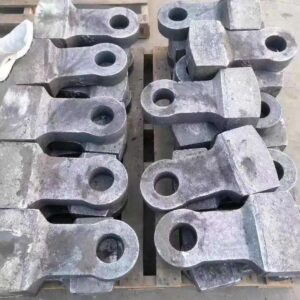
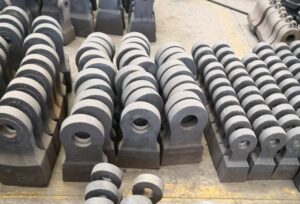
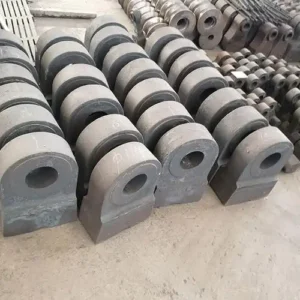
High Manganese Steel Hammer vs High Chrome Hammer: Which Is Better for Crushing Applications?

How to Choose the Right Material for Crusher Wear Parts

INTRODUCTION

In the mining, cement, and quarry industries, crusher hammers play a critical role in determining crushing efficiency, production cost, and equipment uptime. Among all hammer materials, High Manganese Steel and High Chrome Cast Iron are the two most widely used options.

However, many customers often face a common question:

Which crusher hammer is better for my application—High Manganese Steel Hammer or High Chrome Hammer?

The answer is not absolute. It depends on the crushing material, working conditions, and required performance. This article provides a detailed comparison to help you choose the right solution.

1. What Is a High Manganese Steel Crusher Hammer?

High manganese steel hammer is made from austenitic manganese steel, commonly known as:

  • Mn13,
  • Mn18,
  • Mn13Cr2,
  • Mn18Cr2

Material Composition

High manganese steel typically contains:

  • Mn: 11%–18%
  • C: 1.0%–2.4%

Work Hardening Mechanism

One of the most important features of manganese steel is work hardening:

  • Under strong impact, the surface becomes harder
  • The harder the impact, the more wear-resistant it becomes
  • The core remains tough and ductile

Key Characteristics

  • Excellent impact resistance
  • Very high toughness
  • Low risk of fracture
  • Suitable for heavy-duty conditions

Typical Applications

  • Large stone feed materials
  • High-impact crushing environments
  • Mining and quarry operations
  • Construction waste processing

2. What Is a High Chrome Crusher Hammer?

High chrome hammer is made from high chromium cast iron, typically:

  • Cr20
  • Cr26
  • Cr28

Material Structure

  • High chromium carbide structure
  • Very high hardness matrix
  • Strong abrasion resistance

Key Characteristics

  • Extremely high wear resistance
  • Stable hardness from start to end of life
  • Lower toughness compared to manganese steel

Typical Applications

  • Limestone crushing
  • Cement clinker crushing
  • Coal crushing
  • Moderate abrasive materials
High Manganese Steel Hammer vs High Chrome Hammer

3. Material Composition Comparison

PropertyHigh Manganese SteelHigh Chrome Cast Iron
Main ElementMnCr
StructureAustenitic steelChromium carbide
HardnessMedium (work hardening)High (as-cast)
ToughnessVery HighMedium
Wear ResistanceMedium → High (after work hardening)Very High

4. Wear Resistance Comparison

High Manganese Steel Hammer

  • Requires strong impact to activate work hardening
  • Wear resistance improves during operation
  • Performs better in high-impact environments

High Chrome Hammer

  • High hardness from the beginning
  • Excellent resistance to abrasive wear
  • More stable wear performance

Conclusion

  • Abrasive materials → High Chrome performs better
  • Impact-heavy conditions → Manganese Steel performs better

5. Impact Resistance Comparison

High Manganese Steel Advantage

  • Excellent shock absorption
  • Resistant to cracking
  • Suitable for large feed sizes

High Chrome Limitation

  • More brittle structure
  • Risk of breaking under heavy impact
  • Not ideal for irregular large stones

6. Service Life Comparison

Limestone Crushing

  • High Chrome Hammer → Longer service life
  • Manganese Steel → Faster wear

Granite Crushing

  • Manganese Steel → Better durability under impact
  • High Chrome → Risk of breakage

Cement Clinker Crushing

  • High Chrome Hammer → Best performance

Mining Ore Crushing

Depends on ore hardness and impact level


7. Cost Comparison

Initial Cost

  • High Chrome Hammer: Higher material cost
  • Manganese Steel Hammer: Slightly lower cost

Operating Cost

  • High Chrome: Lower replacement frequency
  • Manganese Steel: More frequent replacement in abrasive conditions

Total Cost of Ownership (TCO)

In most cement plants:

  • High Chrome = lower long-term cost
    In high-impact mining:
  • Manganese Steel = safer option
High Manganese Steel Hammer vs High Chrome Hammer

8. Application Comparison by Material

Limestone

✔ Recommended: High Chrome Hammer
Reason: High abrasion, low impact


Cement Clinker

✔ Recommended: High Chrome Hammer
Reason: Very abrasive material


Coal

✔ Recommended: High Chrome Hammer
Reason: Stable crushing conditions


Granite

✔ Recommended: High Manganese Steel Hammer
Reason: High impact and irregular feed


Quartz / Quartzite

✔ Depends:

  • Manganese Steel or Bimetal Hammer preferred

Construction Waste

✔ Recommended: High Manganese Steel Hammer
Reason: Mixed materials and steel contamination


9. Advantages and Disadvantages

High Manganese Steel Hammer

Advantages

  • Excellent toughness
  • High impact resistance
  • Low breakage risk

Disadvantages

  • Lower wear resistance
  • Faster wear in abrasive environments

High Chrome Hammer

Advantages

  • Extremely high wear resistance
  • Long service life in abrasion conditions
  • Stable performance

Disadvantages

  • Brittle structure
  • Risk of fracture under impact

10. Which Crusher Hammer Should You Choose?

Choose High Manganese Steel Hammer if:

  • Crushing large rocks
  • High impact load conditions
  • Risk of hammer breakage is high
  • Irregular feed materials

Choose High Chrome Hammer if:

  • Crushing limestone or clinker
  • Abrasion is the main wear factor
  • Stable feed size
  • Cement plant applications

11. Is Bimetal Crusher Hammer a Better Solution?

In recent years, many cement and mining companies are shifting to Bimetal Crusher Hammers.

Why?

Because it combines both advantages:

  • High chrome wear resistance
  • Alloy steel toughness

Benefits

  • Longer service life
  • Lower breakage risk
  • Reduced maintenance cost

Applications

  • Cement plants
  • Limestone crushing
  • Quarry production lines
  • Mining operations

12. Frequently Asked Questions (FAQ)

Q1: Which hammer lasts longer?

High chrome hammer lasts longer in abrasive conditions, but manganese performs better in high-impact conditions.


Q2: Can high chrome hammer be used for granite?

Not recommended due to high risk of cracking.


Q3: Why does manganese steel become harder during use?

Because of its work hardening property under impact.


Q4: What is the best hammer for cement plant?

High chrome hammer or bimetal hammer is preferred.


Q5: Is bimetal hammer worth it?

Yes, especially for heavy-duty cement and mining applications.


Conclusion

There is no absolute “best” crusher hammer material. The correct choice depends on your crushing conditions:

  • High Manganese Steel → Best for impact-heavy applications
  • High Chrome → Best for abrasive materials
  • Bimetal Hammer → Best overall solution for heavy-duty operations

For cement plants and mining industries, selecting the right hammer material can significantly reduce downtime, improve efficiency, and lower total operating costs.

Email: [john@crusherwearpartspro.com]
WhatsApp: [+86-15057941949]
Website: https://crusherwearpartspro.com/
Get In Touch – Let’s optimize your crushing performance together!

Scroll to Top

Get A Free Quote

Let's have a chat

We specialize in OEM replacement crusher wear parts, including jaw plates, crusher hammers, cone liners, mantles, blow bars, and other mining wear parts.

Please provide your Crusher Model, Part Number, Drawings, or Dimensions to get an accurate quotation and technical support.