MN13Cr2 Crusher Hammer: Properties, Applications and Service Life
INTRODUCTION
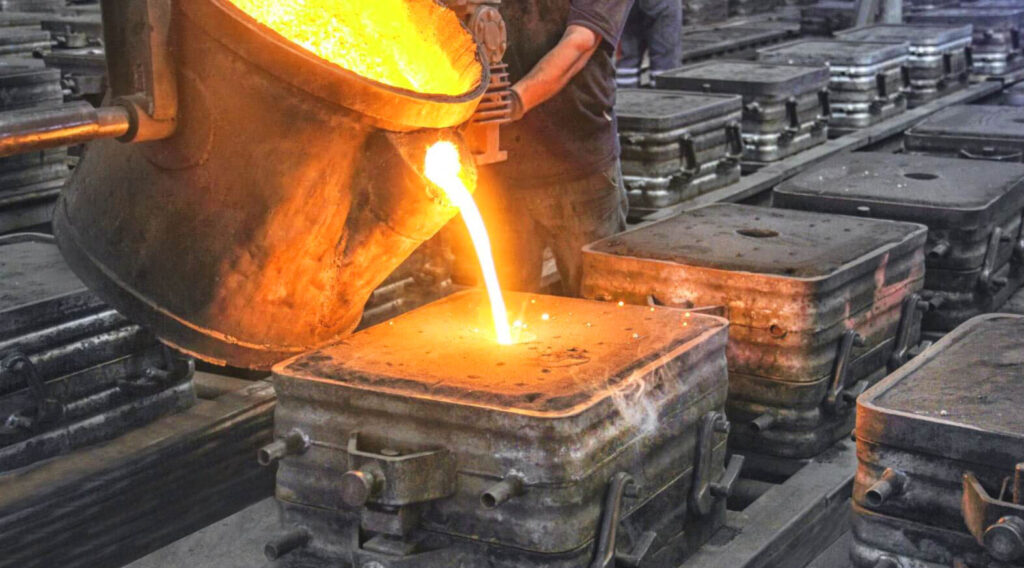
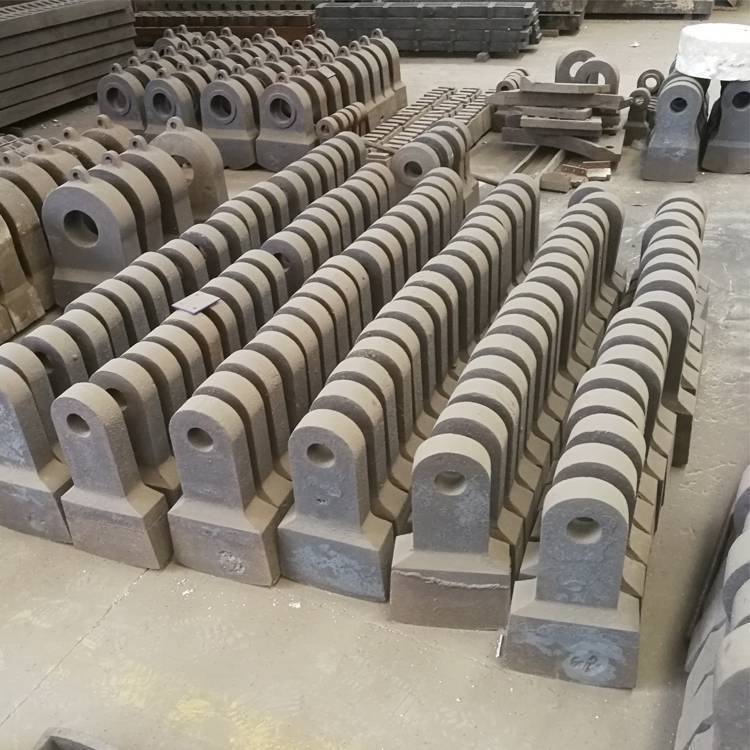
Mn13Cr2 is a modified manganese steel commonly used for crusher hammers exposed to repeated impact and abrasion. Its combination of toughness, work-hardening ability and wear resistance makes it suitable for crushing applications where the hammer must withstand high impact loads without premature breakage.
Compared with conventional Mn13 manganese steel, the addition of chromium can improve the material’s wear resistance and overall performance under suitable crushing conditions.
This guide explains the Mn13Cr2 crusher hammer material, mechanical properties, applications, heat treatment, expected service life and how to choose it for different crushing conditions.
What Is Mn13Cr2 Crusher Hammer?
Mn13Cr2 crusher hammer is a crusher wear part manufactured from high-manganese steel containing manganese and chromium.
The material is designed to combine:
- High impact toughness
- Good resistance to abrasive wear
- Work-hardening capability
- Resistance to cracking under impact
- Good casting performance
- Long service life in suitable applications
The main advantage of manganese steel is its ability to work harden during operation.
When the hammer repeatedly impacts the feed material, the surface layer can become harder while the underlying material retains relatively high toughness. This combination is important for crusher hammers because the component experiences both impact and abrasive wear.
Mn13Cr2 Material Composition
The exact chemical composition of Mn13Cr2 can vary according to the manufacturer’s specification, casting process and applicable standard.
A typical composition may include:
| Element | Typical Function |
|---|---|
| Mn | Provides toughness and work-hardening capability |
| C | Contributes to strength and wear resistance |
| Cr | Improves hardenability and wear resistance |
| Si | Deoxidation and strength |
| P | Controlled at a low level |
| S | Controlled at a low level |
For export orders, the material should be confirmed according to the customer’s drawing, OEM specification or agreed chemical composition rather than relying only on the designation “Mn13Cr2.”
This is particularly important because different manufacturers may use slightly different compositions and heat-treatment specifications under similar material names.

Key Properties of Mn13Cr2 Crusher Hammer
1. High Impact Toughness
One of the biggest advantages of Mn13Cr2 is toughness.
Crusher hammers are subjected to repeated impact forces. A material that is extremely hard but lacks toughness can suffer from cracking or catastrophic breakage.
Mn13Cr2 provides a balance between:
wear resistance + impact resistance + structural toughness.
This makes it suitable for crushers operating with relatively high impact loads.
2. Work Hardening
Work hardening is one of the most important characteristics of manganese steel.
During crushing, the hammer surface repeatedly contacts hard feed material. Under sufficient impact, the surface layer can become significantly harder than its initial condition.
This means the performance of a manganese steel hammer depends not only on its initial hardness but also on:
- Feed material
- Impact energy
- Crusher speed
- Feed size
- Material abrasiveness
- Crusher design
- Hammer geometry
- Operating conditions
Therefore, simply comparing the initial hardness of two crusher hammers does not always predict their actual service life.
3. Good Wear Resistance
Mn13Cr2 offers good wear resistance in applications where impact and abrasion occur simultaneously.
However, it is important to distinguish it from high-chromium materials.
For extremely abrasive materials such as quartz-rich rock, silica sand or other highly abrasive feed, a properly designed high-chrome or composite hammer may provide better wear resistance.
Mn13Cr2 is generally more attractive when impact toughness is a major requirement.
Mn13Cr2 Crusher Hammer Hardness
The hardness of a manganese steel crusher hammer depends on the chemical composition, casting condition and heat-treatment process.
A newly manufactured manganese steel hammer is not necessarily extremely hard in its as-delivered condition. Its performance comes partly from work hardening during operation.
For this reason, manufacturers should not select a hammer only according to a hardness number.
A more meaningful evaluation considers:
Initial hardness + work-hardening behavior + toughness + actual crushing conditions.
For export customers, the supplier should provide the agreed hardness range and, when required, material test certificates.
Mn13Cr2 Crusher Hammer Heat Treatment
Heat treatment is critical to the performance of manganese steel crusher hammers.
A typical manufacturing process includes:
- Pattern and mold preparation
- Melting and chemical composition control
- Casting
- Heat treatment
- Water quenching
- Machining where required
- Dimensional inspection
- Hardness testing
- Visual and surface inspection
- Final inspection and packing
The purpose of heat treatment is to obtain an appropriate metallurgical structure with a good combination of toughness and work-hardening capability.
Poor heat treatment can significantly reduce hammer performance, even when the nominal chemical composition is correct.
Where Are Mn13Cr2 Crusher Hammers Used?
Mn13Cr2 crusher hammers are commonly considered for crushing applications where the material experiences substantial impact.
Typical applications include:
Limestone Crushing
Limestone is one of the most common materials processed by hammer crushers.
Mn13Cr2 can be suitable when the limestone is not excessively abrasive and the crusher generates significant impact loads.
River Stone and Gravel
River stone can produce considerable impact on the hammer.
The suitability of Mn13Cr2 depends strongly on the hardness and abrasiveness of the actual feed material.
Coal Crushing
For suitable coal-crushing applications, manganese steel can provide good toughness and acceptable wear resistance.
Cement and Building Materials
Manganese steel hammers can be used in selected cement and building-material crushing applications, particularly where impact resistance is important.
Quarry Applications
For quarry applications, material selection should consider the actual rock type rather than simply specifying a manganese steel grade.
For example, limestone and highly siliceous rock can produce very different wear rates.

How Long Does a Mn13Cr2 Crusher Hammer Last?
There is no single service-life figure that applies to every Mn13Cr2 crusher hammer.
Actual service life can vary from one crushing plant to another because of differences in operating conditions.
The most important factors include:
1. Feed Material
Material hardness and abrasiveness have a major effect on hammer wear.
A limestone application may produce a very different wear rate from quartz-rich rock.
2. Feed Size
Oversized feed can increase impact loading and accelerate hammer damage.
3. Crusher Rotor Speed
Higher impact energy can increase both crushing efficiency and hammer wear.
4. Feed Distribution
Uneven feeding can cause localized wear on individual hammers.
5. Crusher Design
Rotor diameter, hammer geometry, crushing chamber design and operating parameters all influence wear.
6. Moisture and Contamination
Wet or contaminated feed can sometimes change the crushing and wear behavior.
Therefore, instead of promising a fixed number of operating hours, a professional supplier should evaluate the material, feed size, crusher model and operating conditions before estimating hammer life.
Mn13Cr2 vs Mn13 Crusher Hammer
Mn13 and Mn13Cr2 are both manganese steel materials, but their alloying systems are not identical.
The chromium addition in MN13Cr2 is intended to modify the material’s performance, particularly its wear resistance and metallurgical behavior.
| Feature | Mn13 | Mn13Cr2 |
|---|---|---|
| Manganese steel | Yes | Yes |
| Chromium addition | Lower/none depending on specification | Higher |
| Toughness | Very good | Very good |
| Wear resistance | Good | Generally improved under suitable conditions |
| Work hardening | Excellent | Excellent |
| Impact applications | Excellent | Excellent |
| Material cost | Generally lower | Generally higher |
The better choice depends on the actual crushing application rather than the material name alone.
Mn13Cr2 vs Mn18Cr2
For more demanding wear conditions, customers may also consider higher-alloy manganese grades such as Mn18Cr2.
The correct choice depends on the balance between impact and abrasion.
A simple rule is:
- High impact + moderate abrasion → MN13Cr2 can be a good choice
- Higher abrasion + sufficient impact → consider higher-alloy or high-chrome materials
- Extremely abrasive applications → evaluate high-chrome composite options
Actual material selection should be based on operating data and previous wear results whenever possible.
Mn13Cr2 vs High Chrome Crusher Hammer
This is one of the most important material comparisons for crusher hammer buyers.
Mn13Cr2:
Prioritizes toughness and impact resistance.
High Chrome:
Prioritizes hardness and abrasive wear resistance.
For hard and highly abrasive materials, a high-chrome hammer can potentially achieve a longer wear life.
However, high-chrome materials are generally less tolerant of severe impact than manganese steel.
Therefore:
Do not choose a crusher hammer material based only on hardness. Match the material to the crushing mechanism and feed characteristics.
For customers processing highly abrasive materials, a Cr26 high-chrome composite hammer can also be considered. Its wear-resistant working zone and tougher supporting section are designed to balance abrasion resistance and impact resistance.
How to Improve Mn13Cr2 Crusher Hammer Service Life
Several operating practices can help reduce premature hammer wear.
Maintain Proper Feed Distribution
Feed should be distributed evenly across the rotor whenever possible.
Avoid Excessive Oversize Material
Oversized feed can create excessive impact loads and accelerate cracking or deformation.
Monitor Hammer Wear
Regular inspection allows operators to identify uneven wear before it affects crusher performance.
Rotate or Reverse Hammers When Applicable
Some crusher designs allow hammers to be turned or repositioned to use the available wear surface more efficiently.
Use the Correct Material
If the hammer wears too quickly, changing to a higher wear-resistant alloy may be more effective than simply purchasing a harder version of the same material.
When Should You Choose Mn13Cr2 Crusher Hammers?
Mn13Cr2 is worth considering when your crushing application has a combination of:
- Significant impact loading
- Moderate to high abrasion
- Repeated hammer-to-material impact
- A need for good toughness
- A requirement for reasonable wear life
- Cost-sensitive replacement requirements
It may be less suitable when the feed contains a very high proportion of abrasive silica or other extremely abrasive minerals.
In such cases, high-chrome or composite hammer solutions may provide better overall economics.
How to Choose the Right Crusher Hammer Material
Before ordering a crusher hammer, provide the supplier with as much of the following information as possible:
Crusher information
- Crusher manufacturer
- Crusher model
- Rotor diameter
- Hammer dimensions
- Hammer weight
- Number of hammers
Operating information
- Feed material
- Feed size
- Material hardness
- Capacity
- Rotor speed
- Operating hours per day
Existing hammer information
- Current material
- Current service life
- Main wear problem
- Previous failure or cracking
- Photos of worn hammers
This information allows the manufacturer to recommend a material based on actual operating conditions rather than simply selling the highest-hardness material.
Mn13Cr2 Crusher Hammer Manufacturing Quality
Material grade alone does not guarantee good hammer performance.
A reliable crusher hammer should also be controlled through:
- Chemical composition testing
- Heat-treatment control
- Hardness testing
- Dimensional inspection
- Casting defect inspection
- Metallurgical examination when required
- Final quality inspection
For export orders, customers can request a material test certificate and inspection report according to their requirements.
For critical applications, sample testing and comparison against the customer’s existing hammer can provide more useful information than a material datasheet alone.
Conclusion
Mn13Cr2 crusher hammer is a manganese steel wear part designed to provide a balance between impact toughness, work hardening and wear resistance.
It can be a suitable choice for limestone, gravel, coal, quarry and other crushing applications where the hammer is exposed to repeated impact.
However, there is no universally best crusher hammer material.
The correct choice depends on the relationship between:
impact → abrasion → feed material → crusher design → operating conditions.
For applications with high impact and moderate abrasion, Mn13Cr2 can provide a good balance of performance and cost. For extremely abrasive materials, high-chrome or composite hammer materials may be more appropriate.
Need help selecting the right crusher hammer material? Send us your crusher model, feed material, feed size and current hammer material. We can recommend a suitable material and hammer specification for your application.
Email: [john@crusherwearpartspro.com]
WhatsApp: [+86-15057941949]
Website: https://crusherwearpartspro.com/
Get In Touch – Let’s optimize your crushing performance together!
FAQ
What is Mn13Cr2 crusher hammer?
Mn13Cr2 crusher hammer is a manganese steel crusher wear part containing manganese and chromium. It is designed for applications requiring a combination of impact toughness, work hardening and wear resistance.
Is Mn13Cr2 better than Mn13?
Mn13Cr2 can provide improved wear performance compared with conventional Mn13 under suitable conditions, but the better material depends on the actual crushing application.
Is Mn13Cr2 suitable for limestone?
Yes. Mn13Cr2 can be suitable for limestone crushing, particularly when impact loading is significant. The actual suitability depends on limestone hardness, abrasiveness, feed size and crusher operating conditions.
How long does a Mn13Cr2 hammer last?
There is no universal service-life figure. Hammer life depends on feed material, abrasiveness, feed size, crusher speed, feeding conditions and hammer design.
Is Mn13Cr2 better than high-chrome hammer?
Not necessarily. Mn13Cr2 generally offers better impact toughness, while high-chrome materials generally offer higher resistance to abrasive wear. The correct choice depends on the crushing conditions.
Can Mn13Cr2 crusher hammers be heat treated?
Yes. Proper heat treatment is an important part of manufacturing manganese steel crusher hammers and is essential for achieving the desired combination of toughness and wear performance.