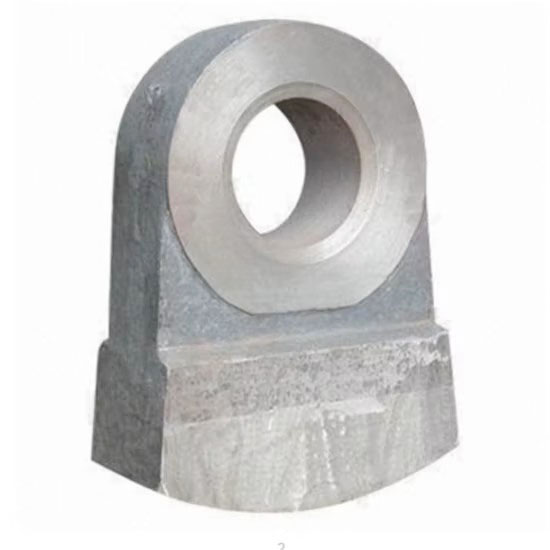
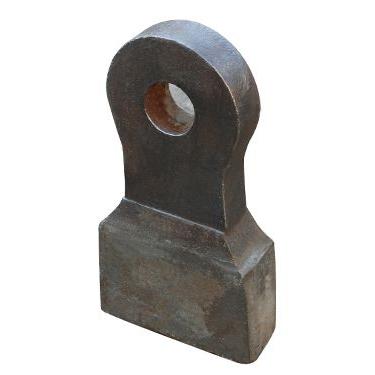
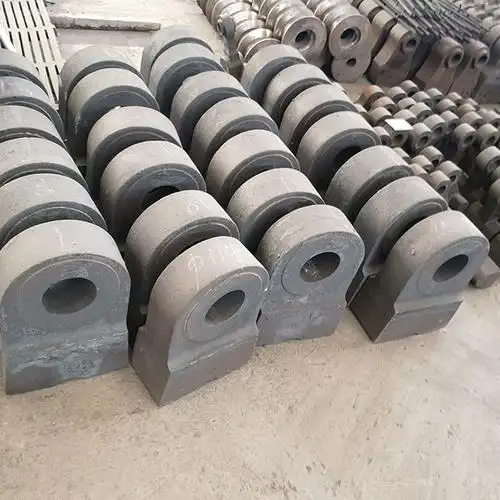
How to Select the Right Material for Crusher Hammers?
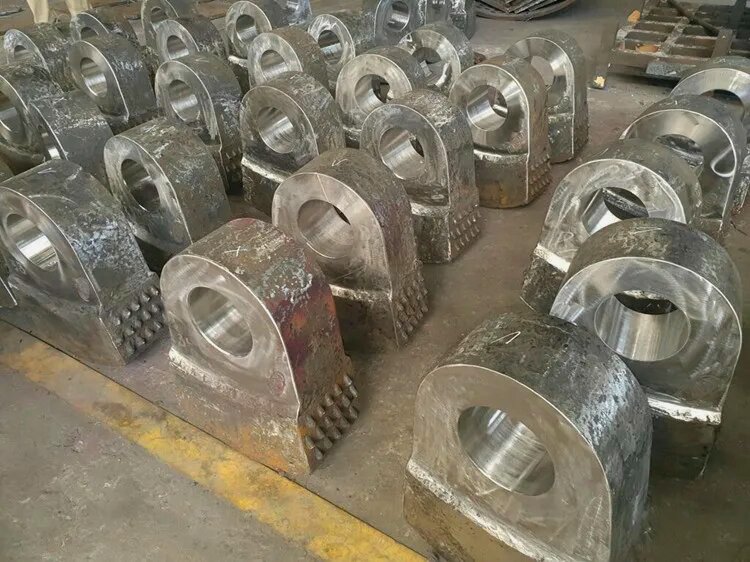
OVERVIEW
Choosing the correct material for your crusher hammers isn’t just a maintenance decision—it is a direct driver of your plant’s profitability. The right material minimizes downtime, reduces replacement costs, and ensures consistent throughput. However, with various alloys available and vastly different operating environments, making the right choice requires a strategic approach.
This guide breaks down the essential factors, material options, and a step-by-step framework to help you select the perfect material for your crusher hammers.
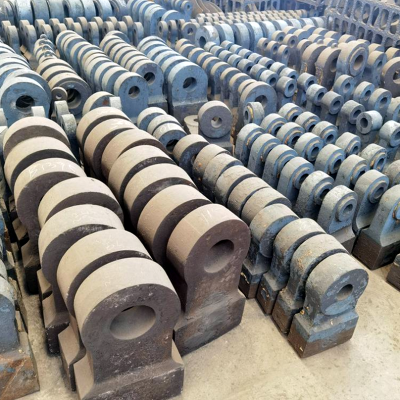
Understanding the Core Trade-Off: Wear Resistance vs. Impact Toughness
Before diving into specific alloys, it is crucial to understand the fundamental physics of crusher wear. You are always balancing two competing mechanical properties:
Wear Resistance (Hardness): The ability of the hammer to resist being gouged or worn away by abrasive materials (like quartz or granite). Higher hardness usually means a longer lifespan in high-abrasion environments.
Impact Toughness: The ability of the hammer to absorb heavy shocks and impacts (from large feed sizes or tramp iron) without fracturing or breaking.
The Golden Rule of Crusher Hammers: As hardness increases, brittleness typically increases, and impact toughness decreases. The goal is to find the “sweet spot” where the material is hard enough to resist wear but tough enough not to break under impact.
Common materials used for crusher hammers
In industrial applications, several types of materials are widely used for hammer production:
- High manganese steel
- Medium manganese steel
- High chromium cast iron
- Low alloy steel
- Composite materials
Each material has its own advantages and limitations depending on the working environment.
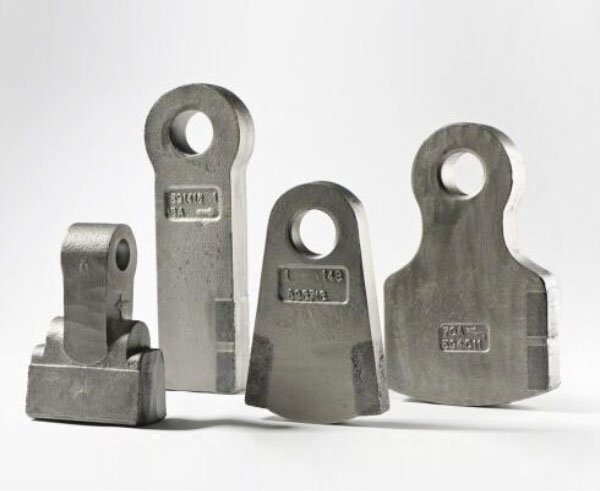
High manganese crusher hammer (Mn13, Mn18, Mn22)
High manganese crusher hammer has been used in the mining industry for decades and remains one of the most common hammer materials.
Characteristics
Best For: High-impact applications with low-to-medium abrasion (e.g., limestone, recycling concrete).
How it Works: Manganese steel (typically 13% to 18% Mn) possesses a unique property called work-hardening. Under heavy impact, the outer surface hardens dramatically (from ~200 HB up to 500+ HB), while the inner core remains ductile and shock-absorbent.
Advantages
- Excellent impact resistance
- High toughness, low risk of breakage
- Reliable performance in coarse crushing applications
- Relatively low cost
Limitations
However, high manganese steel only performs well when sufficient impact force is present. In low-impact or highly abrasive conditions, its wear resistance becomes less effective.
Typical applications
- Limestone crushing
- Coal processing
- Coarse crushing of medium-hard materials
Medium manganese steel – a practical upgrade
Medium manganese steel has gained increasing attention in recent years as an improved alternative to traditional high manganese steel.
Field applications show that its service life can be significantly improved, in some cases by more than 50%.
One of its practical advantages is more stable performance under varying working conditions. In some mineral processing applications, it also offers better resistance to wear while maintaining adequate toughness.
Some versions are even designed with magnetic properties, which can help remove metal impurities during processing.
High chromium cast iron hammer
High chromium cast iron hammer is widely recognized for its excellent wear resistance.
Characteristics
- High hardness (typically HRC 56–65)
- Strong resistance to abrasive wear
- Long service life in highly abrasive environments
Best For: Highly abrasive materials with low-to-medium impact (e.g., sand and gravel, asphalt recycling).
How it Works: Containing 15% to 30% chromium, this material features hard chromium carbides embedded in a matrix. It offers exceptional resistance to scratching and grinding wear.
Limitations
It is brittle. High-velocity impacts from large rocks or uncrushable objects (tramp iron) can cause catastrophic cracking.
Typical applications
- Granite and basalt crushing
- Quartz-rich abrasive materials
- Cement clinker fine crushing
Composite crusher hammers
To overcome the limitations of single materials, composite hammer designs have been developed.
A common structure combines:
- High chromium working surface for wear resistance
- High manganese or low alloy steel body for toughness
This combination allows the hammer to achieve both durability and impact resistance.
In cement and aggregate industries, composite hammers are increasingly used in heavy-duty conditions where both wear and impact are severe.
Bimetal Composite (MMA/Ceramic Inserts)
Best For: Premium performance in high-abrasion, high-impact environments.
How it Works: These hammers utilize a dual-material design. The hitting face or core features ultra-hard ceramic particles or high-chrome iron, while the structural section (the pin-hole area) is made of high-toughness steel or manganese.
Limitation: Higher initial cost, though balanced by significantly longer wear life.
How to choose the right material
Selecting the proper hammer material is not only a technical decision but also an economic one. Several key factors must be considered:
1) Material hardness
Harder rocks require higher wear resistance materials, such as high chromium cast iron.
2) Feed size and impact force
Large feed sizes create stronger impact loads, requiring higher toughness materials like manganese steel.
3) Abrasiveness of material
High silica content significantly increases wear, making high chromium alloys more suitable.
4) Equipment scale
Larger crushers generate higher impact energy, which increases the risk of breakage. In such cases, toughness becomes the priority.
Material Selection Matrix
Use this quick-reference table to match your application with the right material:
| Feed Material Type | Impact Level | Primary Wear Factor | Recommended Hammer Material |
| Soft/Medium Limestone, Shale | Medium to High | Moderate Abrasion | High-Manganese Steel (13%-18% Mn) |
| Granite, Quartzite, Basalt | Low to Medium | Extreme Abrasion | High-Chromium Cast Iron |
| River Gravel, Sandstone | Medium | High Abrasion & Impact | Bimetal Composite / Ceramic Insert |
| Construction & Demolition Waste | High (Risk of Tramp Iron) | Variable | Alloy Steel or High-Manganese Steel |
The balance between hardness and toughness
In practice, hardness and toughness are always in conflict.
- High manganese steel offers excellent toughness but lower hardness
- High chromium cast iron provides excellent hardness but lower toughness
This is why no universal solution exists for all applications.
The correct choice depends entirely on working conditions rather than material cost or theoretical performance.
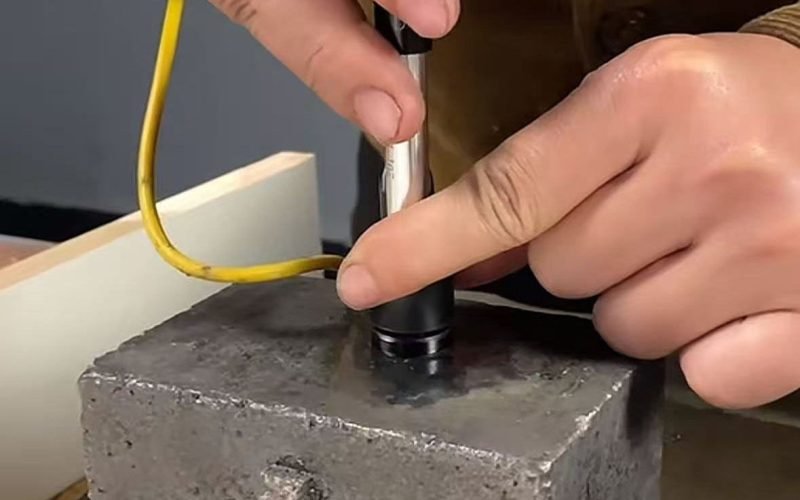
4-Step Framework to Choose Your Hammer Material
To make an accurate selection, evaluate your crushing operation using these four steps:
Step 1: Analyze the Feed Material characteristics
Look closely at the Mohs hardness, silica content, and moisture levels of your feed. Materials with more than 5% free silica are highly abrasive and generally demand high-chrome or ceramic composite solutions.
Step 2: Determine the Crusher Operating Variables
Consider your rotor speed (RPM) and the maximum feed size. High-velocity impact crushers dealing with large boulders require the fracture-resistance of manganese or specialized alloy steels.
Step 3: Identify Your Primary Failure Mode
Look at your discarded hammers. Are they wearing down smoothly but too quickly (abrasion)? Or are they chipping, cracking, or breaking at the tips (excessive impact/brittleness)? Let your wear patterns dictate your next material upgrade.
Step 4: Calculate Total Cost of Ownership (TCO)
Don’t just look at the purchase price. A bimetal hammer might cost twice as much as a manganese hammer, but if it lasts four times longer, you save massively on both part costs and labor downtime.
Conclusion
Crusher hammer selection is ultimately a balance between wear resistance, impact strength, and operational cost.
There is no single material that performs best in all conditions. The most suitable choice always depends on the specific crushing environment, including feed size, material type, and working intensity.
A proper selection can significantly extend service life, reduce downtime, and lower overall operating cost in mining and cement production lines.