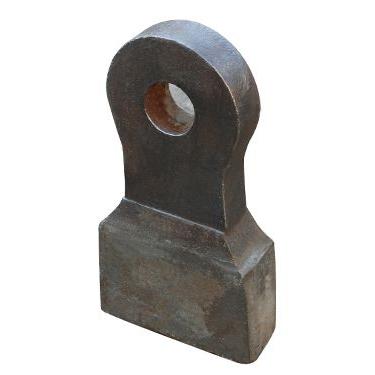
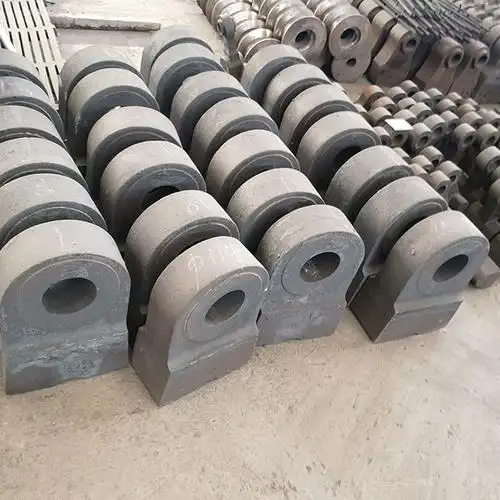
What Is Bimetal Crusher Hammer

INTRODUCTION
In the mining, cement, and quarry industries, crusher hammers are one of the most critical wear parts in hammer crusher machines. Their performance directly affects crushing efficiency, production cost, and equipment downtime.
Among different types of crusher hammers, the Bimetal Crusher Hammer has become one of the most advanced and widely used solutions for heavy-duty crushing applications. It combines high wear resistance and strong impact toughness, making it suitable for harsh working conditions.
In this article, we will explain what a bimetal crusher hammer is, how it works, its structure, and why it is increasingly replacing traditional hammer types in cement plants and mining operations.
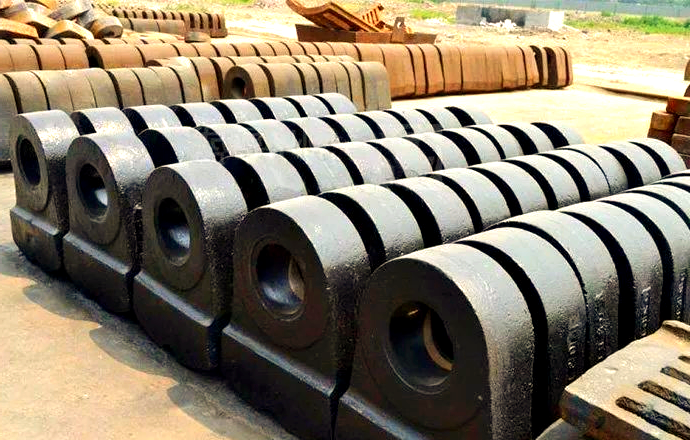
1. What is a Bimetal Crusher Hammer?
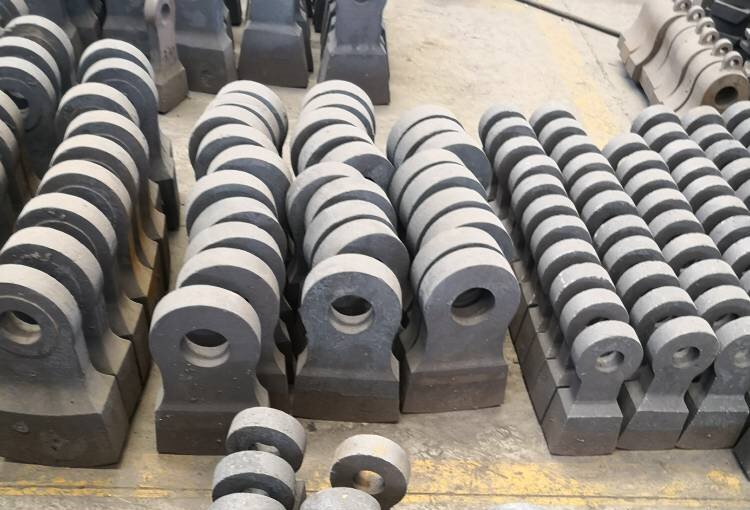
A Bimetal Crusher Hammer is a composite hammer head made from two different metal materials that are metallurgically bonded together during the casting process.
It typically consists of:
- A high-chromium wear-resistant working layer
- A high-toughness alloy steel base layer
This dual-material structure allows the hammer to achieve a perfect balance between:
- Wear resistance (to resist abrasion from stone)
- Impact resistance (to withstand crushing force)
Unlike traditional single-material hammers, bimetal hammers are designed for high-load, high-abrasion, and continuous working conditions.
2. How Does a Bimetal Crusher Hammer Work?
In a hammer crusher machine, the rotor rotates at high speed, causing the hammer to strike and crush materials repeatedly.
During operation:
- The outer high-chrome layer directly contacts the material and resists wear
- The inner alloy steel layer absorbs impact energy
- The hammer maintains structural integrity even under heavy crushing forces
This dual protection system allows the hammer to perform efficiently in both abrasive and high-impact environments.
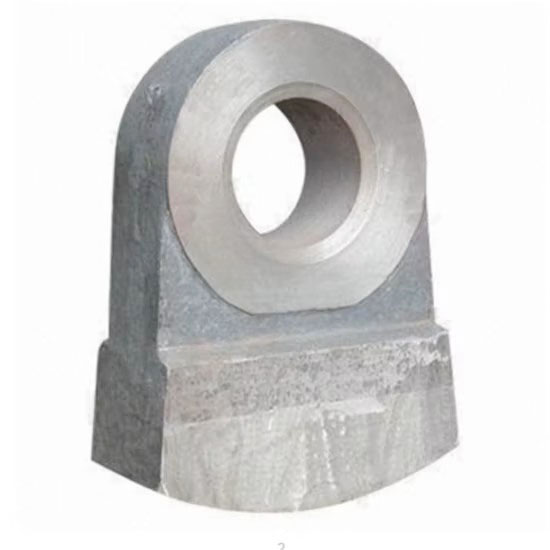
3. Structure and Material Composition
3.1 Working Layer (Wear-Resistant Surface)
The outer working surface is made of high chromium cast iron, commonly including:
- Cr20
- Cr26
- Cr28
This layer is extremely hard and provides excellent resistance against abrasive wear caused by hard materials such as limestone, clinker, and ores.
3.2 Base Layer (Impact-Resistant Body)
The inner structure is made of:
- Alloy steel
- Low alloy steel
- Cr-Mo steel
This part provides:
- High toughness
- Excellent impact absorption
- Resistance to cracking and breaking
3.3 Metallurgical Bonding
The two layers are combined using a composite casting process, forming a strong metallurgical bond instead of mechanical joining. This ensures:
- No separation during operation
- Stable performance under heavy impact
- Long service life
4. Advantages of Bimetal Crusher Hammer
4.1 High Wear Resistance
The high chromium working layer provides excellent resistance against abrasion, especially when crushing:
- Limestone
- Clinker
- Coal gangue
- Medium-hard ores
This significantly reduces surface wear rate.
4.2 Excellent Impact Toughness
The alloy steel base ensures that the hammer can withstand strong impact forces without breaking. This is especially important in:
- Large feed size conditions
- High-speed rotor crushers
- Irregular or hard feed materials
4.3 Longer Service Life
Compared with traditional high manganese steel or high chrome hammers, bimetal hammers can achieve:
- 1.5 to 3 times longer service life
This helps reduce:
- Replacement frequency
- Machine downtime
- Maintenance cost
4.4 Cost Efficiency
Although the initial cost is higher, the overall operational cost is lower because:
- Fewer replacements are needed
- Less downtime in production
- Higher crushing efficiency
4.5 Stable Performance in Harsh Conditions
Bimetal hammers perform well in:
- High impact environments
- High abrasion conditions
- Continuous operation systems
This makes them ideal for industrial-scale production.
5. Bimetal Crusher Hammer vs Traditional Hammer Types
| Type | Wear Resistance | Impact Resistance | Breakage Risk | Best Application |
|---|---|---|---|---|
| High Chrome Hammer | Very High | Low | Medium | Low impact materials |
| High Manganese Steel Hammer | Medium | Very High | Low | High impact conditions |
| Bimetal Crusher Hammer | Very High | Very High | Very Low | Heavy-duty mining & cement |
Key Conclusion:
Bimetal hammer provides the best balance between wear resistance and toughness.
6. Applications of Bimetal Crusher Hammer
6.1 Cement Industry
- Limestone crushing
- Clinker crushing
- Gypsum crushing
6.2 Mining Industry
- Coal crushing
- Medium-hard ore crushing
- Pre-crushing of raw materials
6.3 Quarry Industry
- Aggregate production
- Gravel and stone crushing
- Sand and gravel plants
6.4 Recycling Industry
- Concrete waste crushing
- Brick crushing
- Construction debris processing
7. Suitable Crushing Materials
Bimetal crusher hammers are suitable for:
- Limestone
- Clinker
- Dolomite
- Coal gangue
- Shale
- Construction waste (low steel content)
- Medium-hard ores
⚠ However, for extremely high-silica materials such as pure quartz or hard granite under severe impact conditions, alternative crushing solutions like cone crushers or jaw crushers are recommended.
8. Manufacturing Process
High-quality bimetal crusher hammers are produced through a strict manufacturing process:
- Raw material selection
- Mold design and preparation
- Composite casting (bimetal formation)
- Heat treatment process
- Hardness testing
- Machining and balancing
- Final inspection and quality control
Each hammer is carefully inspected to ensure consistency and reliability.
9. Why Choose Bimetal Crusher Hammer?
Choosing bimetal crusher hammers offers several benefits:
- Reduced maintenance and downtime
- Improved crushing efficiency
- Longer service life
- Lower total operating cost
- Suitable for demanding industrial environments
- Widely used in global cement and mining projects
For high-output production lines, it is one of the most cost-effective wear part solutions.
10. Frequently Asked Questions (FAQ)
Q1: What is the main advantage of bimetal crusher hammer?
It combines high wear resistance and high impact toughness in one product.
Q2: How long does a bimetal hammer last?
It typically lasts 1.5 to 3 times longer than traditional crusher hammers, depending on working conditions.
Q3: Where is it mainly used?
It is widely used in cement plants, mining operations, and quarry industries.
Q4: Can it be customized?
Yes, we provide OEM customization based on drawings, crusher models, or working conditions.
11. Conclusion
The Bimetal Crusher Hammer is an advanced wear part designed for modern crushing applications in cement, mining, and quarry industries. Its unique composite structure provides an excellent balance between wear resistance and impact toughness, making it far superior to traditional hammer types in heavy-duty working conditions.
For companies looking to improve productivity, reduce downtime, and lower maintenance costs, bimetal crusher hammers are one of the best long-term solutions.
Email: [john@crusherwearpartspro.com]
WhatsApp: [+86-15057941949]
Website: https://crusherwearpartspro.com/
Get In Touch – Let’s optimize your crushing performance together!