
How to Customize the Crusher Hammers for Your Hammer Crusher
INTRODUCTION
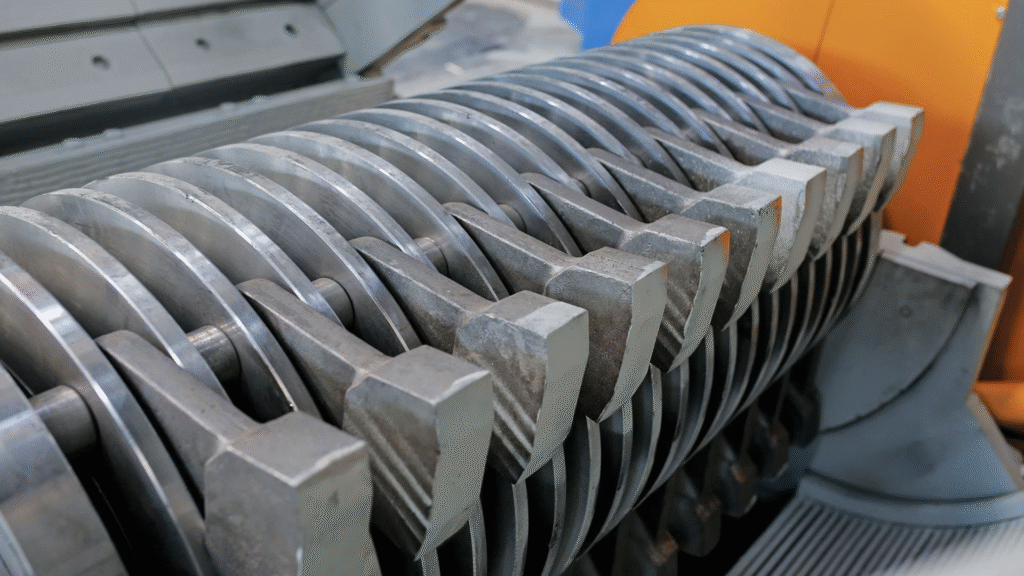
In the world of mining, quarrying, cement manufacturing, and aggregate production, hammer crushers are widely used as primary and secondary crushing equipment because of their high reduction ratio, simple structure, and reliable performance. At the core of every hammer crusher lies its most critical wear part—the crusher hammer. A well-designed, properly customized hammer directly determines the service life, crushing efficiency, maintenance cost, and overall productivity of your crushing line.
Whether you are operating a limestone plant, a clinker grinding line, a coal-fired power station, or a recycling facility, customizing crusher hammers according to your material characteristics, working conditions, and operational goals will significantly improve long-term performance and reduce downtime. This comprehensive guide explains how to customize crusher hammers, what factors matter, how to choose materials, how design affects wear patterns, and how to work with a professional manufacturer to build the ideal hammer for your crusher.
This article is structured as a complete tutorial for plant owners, engineers, and procurement specialists seeking cost-effective solutions and better wear life for their hammer crusher.
1. Why Customized Crusher Hammers Matter
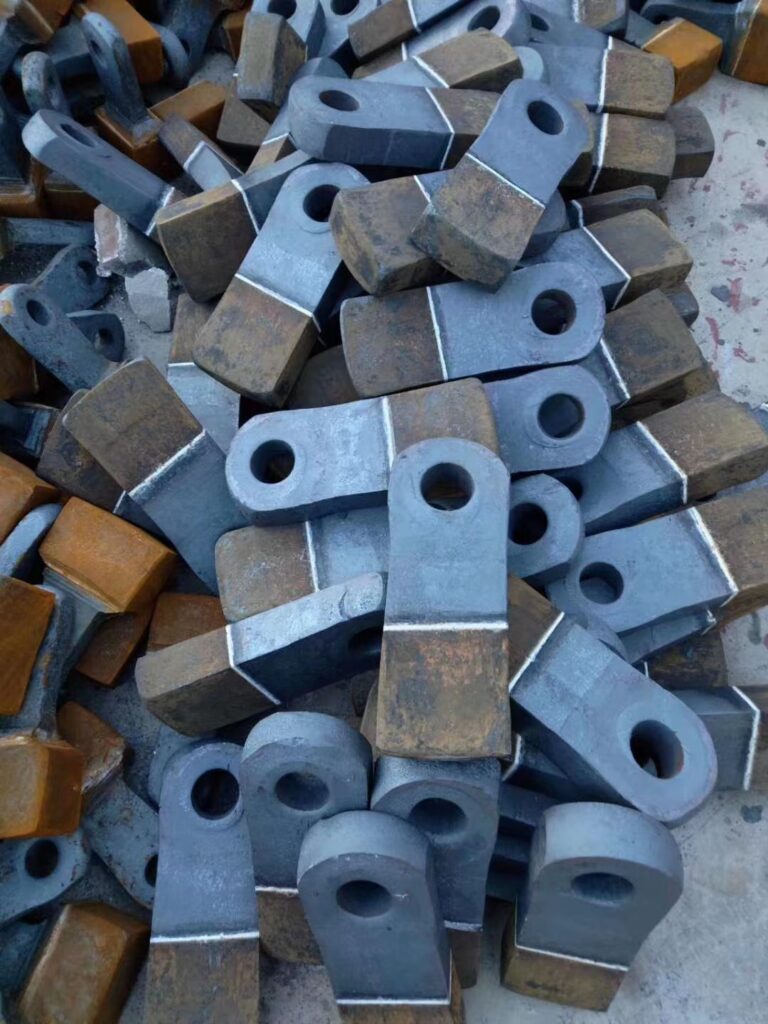
Many facilities rely on standard, off-the-shelf crusher hammers. While convenient, they rarely offer the best working life or efficiency because each application is different. Customized hammers allow you to optimize:
1.1 Longer Wear Life
Wear resistance is the most important factor. Customized metallurgy, heat treatment, and surface hardness can make a hammer last 2—5 times longer than standard parts.
1.2 Better Crushing Efficiency
Correct hammer shape and size ensure proper impact angle, material flow trajectory, and crusher chamber performance.
1.3 Reduced Maintenance Costs
Fewer shutdowns, fewer replacements, and fewer man-hours spent on maintenance translate to massive long-term savings.
1.4 Improved Product Size Control
Optimized hammer geometry helps maintain consistent particle size distribution and reduces fines generation.
1.5 Maximize ROI of Your Hammer Crusher
A hammer crusher is an expensive piece of equipment. Customized hammers allow you to achieve the maximum output and efficiency from your investment.
2. Determine Your Application Requirements Before Customizing
Before designing a hammer, you must clearly understand your material and your operating conditions. A high-quality supplier usually evaluates several factors:
2.1 Material Hardness (Mohs or compressive strength)
Limestone: soft, 3–4 Mohs
Clinker: medium–hard, highly abrasive
Coal: soft but often contains impurities
Glass or recycled materials: highly abrasive
Different hardness levels require different alloying strategies.
2.2 Material Abrasiveness
If the raw material contains high silica, quartz, or other sharp particles, the hammer must prioritize wear resistance rather than impact strength.
2.3 Moisture Content
High moisture levels cause:
Sticky feeding
Build-up on hammer surfaces
Increased clogging
Faster wear in some cases
Hammer design can be adjusted to reduce sticking and improve discharge.
2.4 Impact Load and Feeding Size
Large lumps require high-impact-resistance hammers. Fine or secondary crushing may not require extreme toughness.
2.5 Crusher Speed and Working Temperature
High-speed rotor → need strong impact toughness
High-temperature clinker → need heat-resistant alloys
Understanding these factors ensures the hammer is designed with optimal material composition, shape, and hardness.
3. Choosing the Right Material for Customized Crusher Hammers
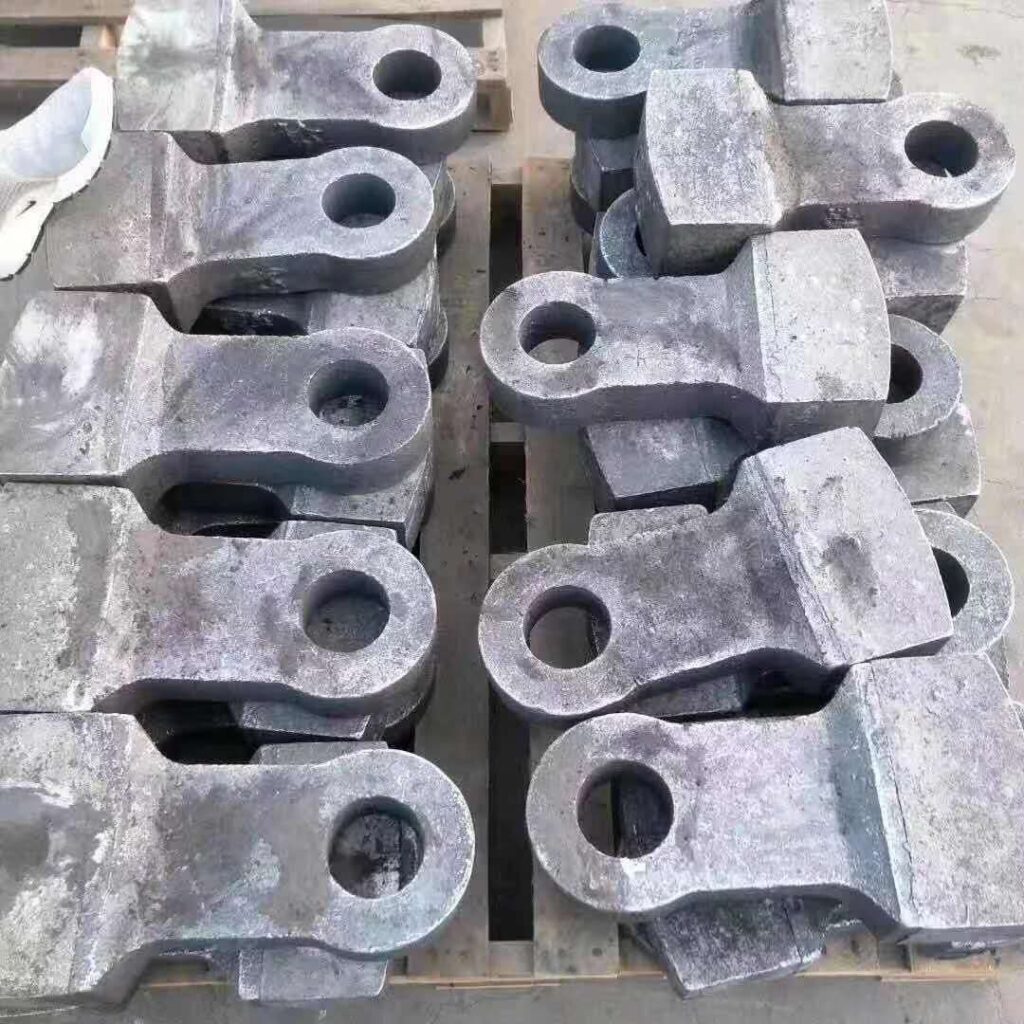
Material selection is the foundation of hammer customization. The wrong metallurgy will cause premature wear, cracking, or breakage.
Here are the most widely used materials and their ideal applications:
3.1 High Manganese Steel (Mn13, Mn13Cr2, Mn18, Mn18Cr2)
Best for:
High-impact environments
Large feed sizes
Limestone, coal, slag
Advantages:
Excellent impact toughness
Work-hardening properties
Affordable cost
Limitations:
Poor wear resistance in abrasive conditions
Not suitable for silica-rich or hard materials
High manganese steel is still a popular choice, but modern industries increasingly move toward alloyed steels or composite materials for longer life.
3.2 High Chromium Cast Iron (Cr20–Cr26)
Best for:
Highly abrasive materials
Secondary and fine crushing
Clinker, quartz, granite, glass
Advantages:
Very high wear resistance
Suitable for abrasive applications
Limitations:
Low impact toughness
Risk of cracking in heavy impact jobs
High chromium hammers are best for stable operating conditions and abrasive materials.
3.3 Martensitic Steel / Alloy Steel (Cr-Mo, Ni-Cr-Mo)
Best for:
Balance of wear resistance and toughness
Limestone mixed with impurities
Cement plants and quarries
Advantages:
Better toughness than high chromium
Better wear resistance than manganese
Good balance for most applications
This material is popular for customers needing consistent performance under mixed conditions.
3.4 Bi-Metal Composite Hammers
These have a high-chromium or ceramic wear surface bonded to a tough steel base.
Best for:
Extremely abrasive material under moderate impact
Coal with impurities
Clinker crushing
Advantages:
Longest wear life
Excellent combination of strength and hardness
Best for cost-per-ton optimization
Limitations:
Higher initial cost
However, many customers report 3–8× longer life, making them highly cost-effective.
3.5 Tungsten Carbide / Ceramic Insert Hammers
These are premium hammers reinforced with ceramic or carbide inserts.
Best for:
Ultra-abrasive material
High output production lines
Customers focused on long-term ROI
They provide extreme durability and minimal downtime.
To achieve the best performance, many customers choose premium hammers from ECONE Filtration & Mining Wear Parts. Our factory supplies high-quality crusher hammers manufactured with advanced alloy steel, high chromium iron, and bi-metal composite technology. These hammers offer extended wear life, excellent impact resistance, and reliable stability for limestone, clinker, coal, and aggregate crushing lines
4. Customize the Crusher Hammer Design and Geometry
Material choice is only part of customization. Hammer geometry plays a critical role in performance.
4.1 Hammer Size and Weight
Heavier hammers impact the material harder and produce:
Higher crushing efficiency
Coarser output size
Higher rotor vibration if not balanced
Lighter hammers reduce energy consumption and wear.
4.2 Hammer Face Profile
Different hammer face designs achieve different outcomes:
| Hammer Face Type | Best For | Advantages |
|---|---|---|
| Flat Face | Limestone, coal | Uniform wear, stable performance |
| Curved Face | High-speed crushers | Improved crushing angle |
| Serrated / Toothed | Sticky material | Helps grip and break wet feed |
| Bevelled Edge | Hard material | Reduces wear at contact point |
4.3 Hammer Length
Longer hammers increase contact area but can break more easily if not properly supported. Shorter hammers increase impact force.
4.4 Hole Design and Shank Fit
Different crushers use:
Eye-type hammers
Tee-type hammers
Locking wedges
Fixed or swing-type
Precise machining ensures perfect fit and avoids hammer misalignment.
4.5 Rotor Compatibility
A properly customized hammer:
Fits the rotor without looseness
Maintains correct clearance
Ensures stable rotation
Reduces vibration
4.6 Wear Pattern Optimization
Engineers analyze:
Impact zone
Sliding abrasion zone
Corner wear
Hammer trailing edge wear
Custom shape optimization can improve wear life by 20%–50%.
5. Customizing Surface Hardness and Heat Treatment
Heat treatment determines how strong, tough, and wear-resistant your hammer becomes.
5.1 Controlled Heat Treatment
Manufacturers adjust:
Quenching temperature
Cooling rate
Tempering steps
This produces ideal hardness for your material.
5.2 Wear Surface Hardness
Depending on alloy, hammers can reach:
50–60 HRC (high chromium)
40–48 HRC (martensitic alloy steel)
200–250 HB → 500 HB (work-hardening manganese)
5.3 Hardfacing
Hardfacing can be added to:
Leading edges
High-wear corners
Impact zones
Different hardfacing alloys include:
Chromium carbide
Tungsten carbide
Ni-hard alloys
Hardfacing significantly extends wear life.
6. Customizing Crusher Hammers for Specific Industries
6.1 Limestone Crushing
Recommended: Mn18Cr2 or alloy steel
Focus: impact resistance
Hammer face: flat or curved
6.2 Clinker Crushing
Recommended: High chromium or composite hammer
Focus: abrasion resistance
Add heat-resistant alloying elements
6.3 Coal Crushing
Recommended: Mn13 or composite hammer
Focus: mixed impact + abrasion
Often customized for high moisture
6.4 Recycling (glass, construction waste)
Recommended: composite or ceramic insert
Focus: extremely abrasive material
Each application needs a different customization strategy.
7. How to Work With a Manufacturer to Customize Your Crusher Hammer
A professional supplier will follow a structured process:
7.1 Step 1 — Technical Consultation
You provide details:
Raw material type
Daily output
Crusher model
Hammer weight requirements
7.2 Step 2 — Material Analysis
Engineers propose the correct alloy.
7.3 Step 3 — Design and Modeling
This includes:
Hammer shape
Hole size
Balancing
Weight distribution
7.4 Step 4 — Sample Production
A test batch is produced.
7.5 Step 5 — Field Testing
Your operators track wear performance.
7.6 Step 6 — Optimization
Final adjustments ensure optimal performance.
8. Signs You Need Customized Crusehr Hammers
You should consider customizing if you experience:
Hammers wearing out too fast
Cracks or breakage
Excessive vibration
More dust and fines than expected
Irregular product size
High maintenance frequency
Rotor imbalance
Each issue can be resolved with customized hammer design.
9. Benefits of Using Customized Crusher Hammers
9.1 Lower Cost Per Ton
Less wear + less downtime = more output at lower cost.
9.2 Higher Production Efficiency
Consistent crushing performance improves throughput.
9.3 Smarter Material Selection
Optimized alloys reduce the risk of failure.
9.4 Better Stability and Less Vibration
Better fit means smoother operation.
9.5 Maximize ROI
Customization typically pays back within a few months.
10. Conclusion
Customizing crusher hammers is not just about choosing a stronger metal. It is a scientific process that involves analyzing your material, your operating environment, your hammer crusher model, and your production goals. Properly customized hammers can dramatically increase wear life, reduce maintenance costs, and improve productivity.
If you want the best results, work with an experienced hammer manufacturer that can provide:
Professional engineering design
Customized alloy formulation
Accurate machining
Strict heat treatment
Reliable performance testing
With the right partner, you can reduce downtime, improve crushing efficiency, and achieve long-term savings.
Email: [ljj2914@163.com]
WhatsApp: [+86-15057941949]
Website: https://crusherwearpartspro.com/
Get In Touch – Let’s optimize your crushing performance together!