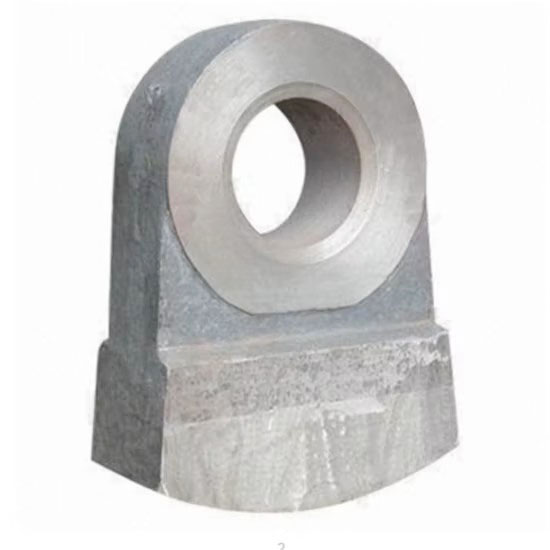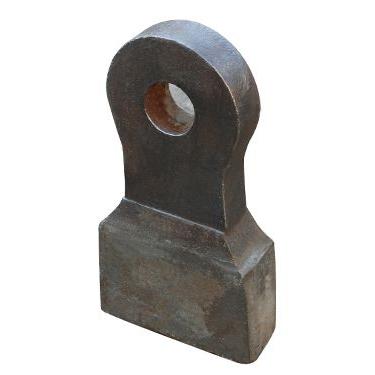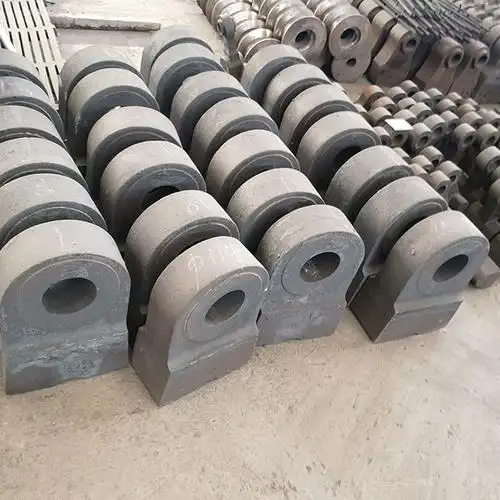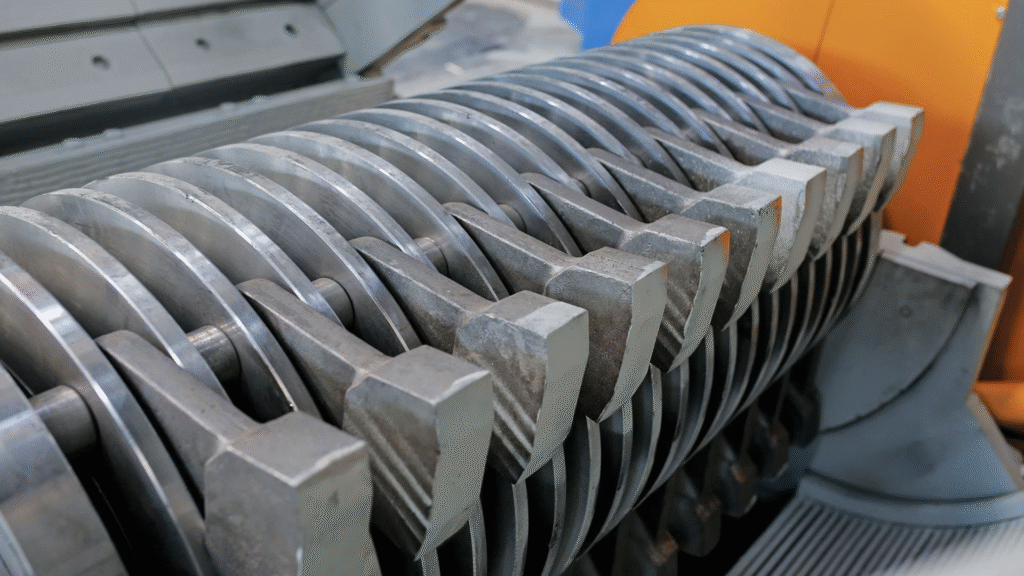


Composition:
Carbon (C): 0.3–0.6%
Chromium (Cr): 8–12%
Nickel (Ni): 1–2%
Features:
Balanced combination of hardness and toughness.
Hardness: 45–55 HRC; can be improved through heat treatment.
Good resistance to both impact and abrasion.
Applications:
Ideal for medium-hard materials such as shale, limestone, and coal gangue.
Common in quarrying and recycling industries.
Advantages:
Can outperform manganese steel in certain abrasive conditions.
Cost-effective with longer wear life.
2.4 Alloy Steel with TIC or Ceramic Inserts
Composition:
Base: Martensitic or manganese steel
Reinforcement: Titanium carbide (TIC) or ceramic bars
Features:
Composite structure: soft, tough matrix + extremely hard inserts
Wear life can be 2–5 times longer than standard hammers
Inserts prevent localized wear at impact zones
Applications:
Used in high-impact crushers for mining and cement.
Ideal for crusher hammers in recycling plants crushing metal, slag, or concrete.
Advantages:
Excellent combination of wear resistance and toughness.
Lower replacement frequency, reduced downtime.
2.5 Bimetallic Hammers
Composition:
Hard high-chrome head + tough low-alloy steel base
Metallurgically bonded to form a single composite piece
Features:
Superior wear resistance at impact zone
Shock-absorbing base prevents fracture
Customizable to suit various crushing environments
Applications:
Cement, quarrying, and metal recycling plants
3. Wear Mechanisms of Crusher Hammers
Even the best materials eventually wear out. Understanding how and why helps optimize design and material selection.
3.1 Abrasive Wear
Occurs when hard particles (like quartz or clinker dust) scratch and cut the hammer surface. This is the primary wear mechanism in limestone and cement crushing.
3.2 Impact Wear
Repeated impact loads cause surface fatigue cracks. Over time, small cracks propagate and cause material spalling or breakage.
3.3 Thermal Wear
In clinker crushing or metal recycling, hammers face high temperatures (200–600°C). Heat accelerates oxidation and softens the metal surface.
3.4 Corrosive Wear
Certain materials, such as wet limestone or chemical residues, can introduce corrosion, reducing hammer life.
4. Factors Affecting Hammer Wear Resistance
Material Hardness – Higher hardness increases wear resistance but reduces toughness.
Microstructure – Uniform martensitic or austenitic structures perform better under stress.
Heat Treatment – Correct quenching and tempering can double wear life.
Feeding Conditions – Oversized or uneven feed accelerates wear.
Rotor Speed – Excessive speed causes premature hammer breakage.
Operating Temperature – High temperature reduces metal hardness.
5. Improving the Wear Resistance of Crusher Hammers
5.1 Optimizing Alloy Composition
Add elements like Mo, Ni, and Cr to enhance strength and corrosion resistance.
Use controlled carbon content to prevent brittleness.
5.2 Surface Hardening Treatments
Carburizing, nitriding, and shot peening improve surface strength.
Work-hardening surfaces under impact conditions (for Mn steel).
5.3 Applying Composite Reinforcement
Use TIC or ceramic inserts in key wear zones.
Bimetallic or composite casting improves resistance in high-wear environments.
5.4 Proper Heat Treatment
Controlled quenching and tempering maintain optimal microstructure.
Prevents over-hardening that leads to cracking.
5.5 Maintenance and Replacement
Regular inspection for wear pattern analysis.
Rotate or reverse hammers periodically to use the full surface.
Maintain balanced rotor operation.
6. Applications Across Industries
Crusher hammers made from different materials are used in multiple industries:
| Industry | Typical Material | Main Crushed Material | Example Crusher |
|---|---|---|---|
| Cement Industry | High chrome, bimetal | Limestone, clinker | Hammer crusher, impact crusher |
| Mining Industry | Mn steel, TIC insert | Iron ore, gold ore | Heavy-duty hammer crusher |
| Quarrying Industry | Martensitic, alloy steel | Granite, basalt | Cone and impact crusher |
| Recycling Industry | Bimetal, ceramic insert | Concrete, slag, scrap metal | Impact or shredder crusher |
| Coal Industry | Mn steel | Coal, gangue | Reversible hammer crusher |
Each industry requires a unique balance between impact resistance and abrasion resistance. Selecting the right crusher hammer material composition ensures maximum productivity and minimal maintenance cost.
7. Case Studies and Performance Results
Cement Plant (Vietnam):
Replaced standard Mn13 hammers with Cr20Mo2 high-chrome alloy. Wear life improved by 250%.Mining Quarry (South Africa):
Switched to TIC insert hammers, resulting in a 3× increase in lifespan and fewer shutdowns.Recycling Plant (Europe):
Adopted bimetal composite hammers for crushing concrete waste. Replacement cycle extended from 2 weeks to 2 months.
8. Why Choose Our Crusher Hammers
 Over 15 years of manufacturing experience in crusher wear parts Factory direct supply, OEM & ODM supported Advanced casting and heat treatment technology Full range of materials: Mn, Cr, Martensitic, TIC, Bimetal Strict quality control and 100% inspection Global delivery and after-sales support Custom alloy design based on your working conditions
9. Conclusion
Understanding the crusher hammer material composition and wear resistance is essential to improving crusher performance and reducing production costs. Choosing the correct alloy and heat treatment method directly influences productivity, efficiency, and hammer life.
At Econe, we design and produce crusher hammers that deliver maximum durability and value across the cement, mining, quarrying, and recycling industries. Contact us today to get technical advice and a customized quotation for your crushing application.