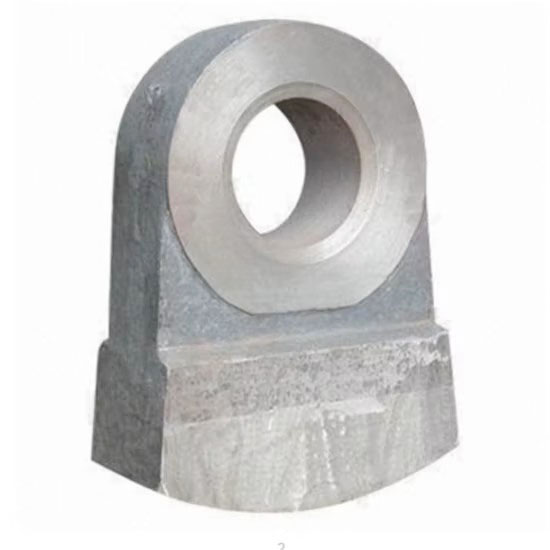
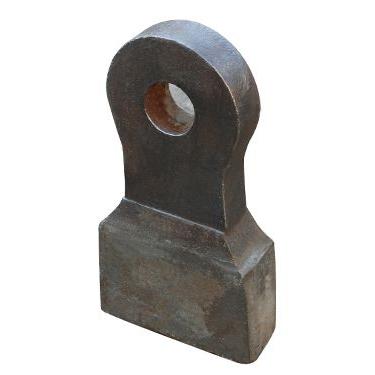
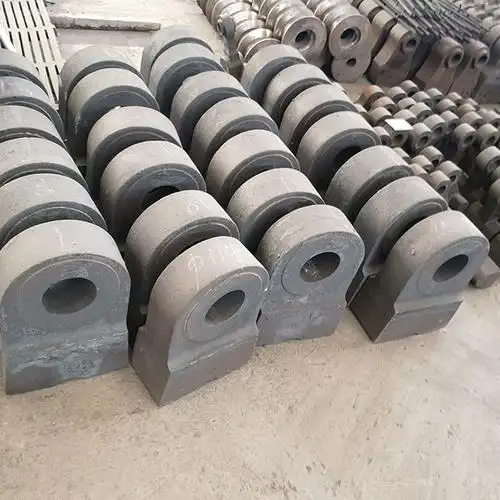
TiC Ceramic Insert Crusher Hammer
High-Manganese Steel Hammer with TiC Ceramic Inserts for Enhanced Wear Resistance
OVERVIEW
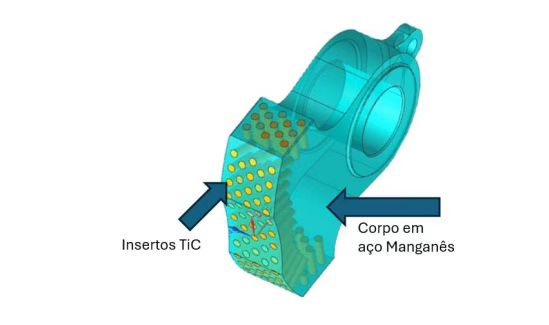
Our TiC Ceramic Insert Crusher Hammer combines a tough high-manganese steel hammer body with wear-resistant titanium carbide (TiC) ceramic inserts. The TiC inserts are positioned in the high-wear areas of the hammer to provide additional resistance against abrasive wear, while the high-manganese steel substrate provides the toughness required to withstand repeated impact during crushing.
This composite design is suitable for demanding crushing applications where conventional manganese steel hammers experience rapid wear.
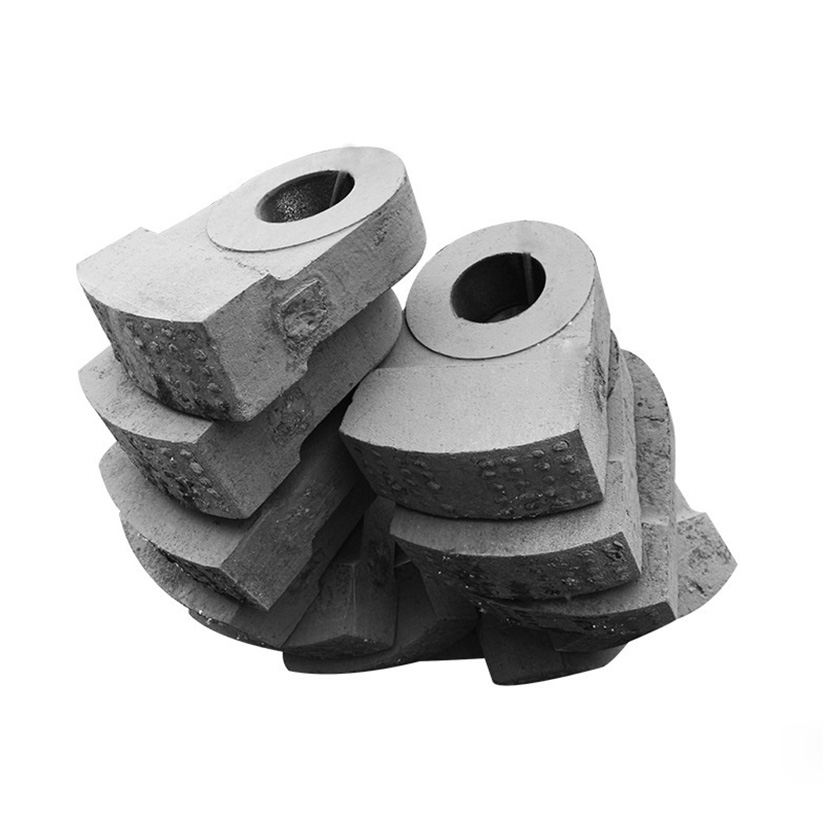
What Is a TiC Ceramic Insert Crusher Hammer?
A TiC Ceramic Insert Crusher Hammer is a composite wear part manufactured with TiC ceramic inserts embedded in a high-manganese steel hammer body.
The high-manganese steel provides the structural strength and impact toughness of the hammer, while the TiC ceramic inserts are concentrated in the working and high-wear zones.
Compared with a conventional high-manganese steel hammer, the TiC inserts provide a harder and more wear-resistant surface in critical areas exposed to abrasive materials.
The result is a combination of:
- High impact toughness from the manganese steel substrate
- High wear resistance from TiC ceramic inserts
- Reinforced protection of high-wear areas
- Customized insert distribution according to the wear pattern
- OEM dimensions and mounting configurations
TiC Ceramic Insert Hammer Structure
The hammer consists of two primary materials:
High-Manganese Steel Substrate
The hammer body is manufactured from high-manganese steel, which provides good toughness and resistance to impact loading.
Typical manganese steel grades can include:
- Mn13
- Mn13Cr2
- Mn18Cr2
- Other customized manganese steel grades
The actual grade can be selected according to the crusher type, feed material and operating conditions.
TiC Ceramic Inserts
Titanium carbide ceramic inserts are embedded into the high-wear areas of the hammer.
The inserts act as localized wear-resistant elements and reduce direct exposure of the manganese steel substrate to abrasive material.
The size, number, spacing and arrangement of TiC inserts can be customized according to the hammer design and expected wear pattern.
How Does a TiC Ceramic Insert Hammer Work?
During crushing, the working surface of the hammer is continuously exposed to impact and abrasive wear.
The high-manganese steel substrate absorbs impact and provides structural toughness, while the TiC ceramic inserts protect selected high-wear areas.
This creates a composite wear system:
Impact toughness → High-manganese steel
Localized wear resistance → TiC ceramic inserts
Instead of relying on one material to provide both extreme wear resistance and impact toughness, the composite design places each material where its properties are most useful.
Advantages of TiC Ceramic Insert Crusher Hammers
Enhanced Wear Resistance
TiC ceramic inserts provide high wear resistance in areas exposed to severe abrasion.
They can help reduce the wear rate of the working surface when the hammer is used with suitable abrasive materials.
High Impact Toughness
The hammer body remains made from high-manganese steel rather than a fully ceramic or extremely hard alloy material.
This helps maintain the toughness required for repeated impact during crushing.
Reinforced High-Wear Areas
TiC inserts can be concentrated in the areas where conventional manganese steel wears most rapidly.
The insert arrangement can therefore be optimized according to the actual wear pattern of the hammer.
Longer Service Life in Suitable Applications
By combining manganese steel toughness with TiC wear resistance, the composite hammer can provide longer service life than conventional manganese steel hammers in suitable abrasive applications.
Actual service life depends on the material being crushed, feed size, impact intensity, crusher configuration and operating conditions.
Reduced Hammer Replacement Frequency
Longer wear life can reduce the frequency of hammer replacement and associated maintenance downtime.
TiC Ceramic Insert Hammer vs. Conventional Manganese Steel Hammer
| Feature | Conventional Mn13/Mn13Cr2 Hammer | TiC Ceramic Insert Hammer |
|---|---|---|
| Hammer substrate | Manganese steel | Manganese steel |
| Wear-resistant inserts | No | TiC ceramic inserts |
| Impact toughness | High | High |
| Abrasion resistance | Good to very good | Higher in reinforced areas |
| High-wear zone protection | Conventional | TiC reinforced |
| Material cost | Lower | Higher |
| Suitable for abrasive applications | Yes | Particularly suitable for selected abrasive applications |
| Custom insert arrangement | No | Yes |
The TiC ceramic insert hammer is not intended to replace manganese steel in every crushing application. It is most useful where abrasive wear is a major factor limiting conventional hammer life.
TiC Ceramic Insert Arrangement
The arrangement of TiC inserts has a direct influence on the wear performance of the hammer.
Depending on the hammer design, inserts can be arranged in different configurations, including:
- Linear arrangement
- Staggered arrangement
- Concentrated wear-zone arrangement
- Multi-row arrangement
- Customized insert patterns
The insert configuration can be designed according to:
- Crusher model
- Hammer geometry
- Feed material
- Feed size
- Rotor speed
- Existing wear pattern
- Expected impact intensity
Instead of using the same insert pattern for every application, we can customize the TiC insert distribution according to the actual working conditions.
Applications
TiC Ceramic Insert Crusher Hammers are designed for crushing applications where abrasive wear can significantly reduce the service life of conventional manganese steel hammers.
Potential applications include:
Limestone Crushing
Suitable for selected limestone crushing applications where abrasion is a significant wear factor.
Cement Industry
Used in selected crushing processes for cement raw materials and other abrasive materials.
Mining
TiC insert hammers can be considered for selected mining applications involving abrasive ores and minerals.
Quarrying
Suitable for certain aggregate and quarry crushing applications, depending on material hardness and impact conditions.
Recycling
Can be used in selected applications involving abrasive construction and demolition materials.
The recommended hammer material should always be selected according to the actual crushing conditions rather than material name alone.


Compatible Crusher Types
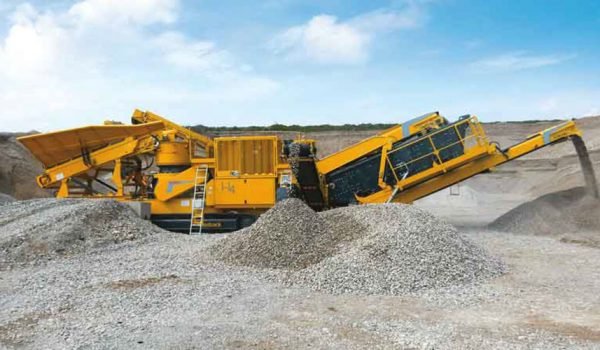
Depending on the hammer design and dimensions, TiC Ceramic Insert Hammers can be manufactured for different types of crushing equipment, including:
- Hammer crushers
- Heavy hammer crushers
- Impact crushers
- Hammer mills
- Other OEM crushing equipment
We manufacture replacement hammers according to OEM drawings, samples, dimensions or part numbers.
Custom TiC Ceramic Insert Crusher Hammers
Different crushers and applications require different hammer designs.
We can customize the following:
- Hammer dimensions
- Hammer weight
- Mounting hole dimensions
- High-manganese steel grade
- TiC insert size
- TiC insert quantity
- Insert spacing
- Insert arrangement
- Working-area reinforcement
- Heat treatment requirements
If you have an existing hammer that wears rapidly, we can also evaluate the wear pattern and recommend a suitable TiC insert arrangement.
High-Manganese Steel Grades
The high-manganese steel substrate can be selected according to the application.
Common options include:
Mn13
A traditional austenitic manganese steel with good toughness and work-hardening characteristics.
Mn13Cr2
A manganese-chromium steel commonly used for crusher wear parts where a combination of toughness and wear resistance is required.
Mn18Cr2
A higher-alloy manganese steel option for selected demanding applications.
The final material selection depends on the crusher, feed material, impact conditions and required wear performance.
Manufacturing Process
Our TiC Ceramic Insert Crusher Hammers are manufactured through controlled casting and heat-treatment processes.
The typical manufacturing process includes:
- Pattern and tooling preparation
- High-manganese steel melting
- Chemical composition control
- TiC insert positioning
- Casting
- Heat treatment
- Machining
- Dimensional inspection
- Hardness testing
- Final quality inspection
Particular attention is paid to the position and distribution of the TiC inserts to ensure they are located in the intended high-wear areas.
Quality Control
Each batch of TiC Ceramic Insert Crusher Hammers can be inspected according to the agreed technical requirements.
Quality control can include:
- Chemical composition testing
- Hardness testing
- Dimensional inspection
- Visual inspection
- Casting quality inspection
- TiC insert positioning inspection
- Heat-treatment inspection
- Final dimensional verification
Inspection requirements can be agreed before production.
TiC Ceramic Insert Crusher Hammer Service Life
The service life of a TiC insert hammer varies significantly between different crushing applications.
The main factors include:
- Abrasiveness of the feed material
- Material hardness
- Feed size
- Crusher type
- Rotor speed
- Crushing ratio
- Impact intensity
- Hammer design
- TiC insert arrangement
- Crusher operating conditions
For this reason, we do not recommend using a fixed service-life figure for every application.
A more accurate recommendation can be made by analyzing your current hammer material, operating conditions and actual wear pattern.
How to Choose the Right TiC Insert Hammer
Before selecting a TiC Ceramic Insert Crusher Hammer, we recommend providing the following information:
- Crusher manufacturer
- Crusher model
- Hammer part number
- Hammer drawing or dimensions
- Current hammer material
- Material being crushed
- Maximum feed size
- Crusher capacity
- Current hammer service life
- Photos of the worn hammer, if available
This information helps us determine whether a TiC insert hammer is suitable for your application and how the inserts should be positioned.
OEM Replacement TiC Ceramic Insert Hammers
We supply replacement crusher hammers according to OEM dimensions and customer requirements.
You can send us:
- OEM part number
- Technical drawing
- Existing hammer sample
- Hammer photos
- Dimensions
- Crusher model
We can manufacture replacement TiC ceramic insert hammers with the required high-manganese steel substrate and customized TiC insert configuration.
Frequently Asked Questions
What is a TiC Ceramic Insert Crusher Hammer?
It is a composite crusher hammer made with a high-manganese steel substrate and TiC ceramic inserts positioned in high-wear areas.
What is the base material of a TiC insert hammer?
The base material of our TiC Ceramic Insert Crusher Hammer is high-manganese steel. Depending on the application, Mn13, Mn13Cr2, Mn18Cr2 or other manganese steel grades can be selected.
Why are TiC inserts used in manganese steel hammers?
TiC inserts provide additional wear resistance in high-wear areas while the manganese steel substrate provides the toughness required to withstand impact.
Is a TiC insert hammer better than an Mn13Cr2 hammer?
Not necessarily for every application. A TiC insert hammer is particularly worth considering when abrasive wear is the main limitation of a conventional manganese steel hammer. The best choice depends on the crushing conditions.
Can the TiC insert arrangement be customized?
Yes. The size, quantity, spacing and arrangement of the TiC inserts can be customized according to the hammer design and wear pattern.
Can you manufacture OEM TiC insert crusher hammers?
Yes. We can manufacture TiC Ceramic Insert Crusher Hammers according to OEM drawings, samples, part numbers or detailed dimensions.
What information do you need for a quotation?
Please provide the crusher model, hammer part number, drawing or dimensions, current material, crushed material and required quantity. Photos of the existing hammer are also helpful.
Request a Quote
Looking for a TiC Ceramic Insert Crusher Hammer for your crusher?
Send us your crusher model, hammer drawing, part number or photos.
We can evaluate your application and recommend the appropriate high-manganese steel grade, TiC insert arrangement and hammer design.
Request an OEM quotation today.