How to Choose Between Mn13 and Mn18 High Manganese Steel Crusher Hammers
INTRODUCTION
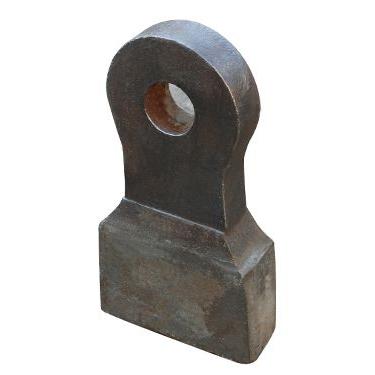
High manganese steel crusher hammers are among the most widely used wear parts in crusher hammer crushers, impact crushers, and clinker crushers across industries such as cement, mining, aggregate, metallurgy, and recycling. Known for their excellent work-hardening properties and remarkable impact resistance, high manganese alloys—especially Mn13 and Mn18—remain the dominant material choices for crusher hammer production.
However, many buyers still struggle when choosing between Mn13 and Mn18. What are the differences? Which grade is better for your crusher and working conditions? How can you maximize service life while reducing downtime and replacement costs?
This comprehensive guide will help you understand the essential differences between Mn13 and Mn18 high manganese crusher hammers, evaluate your application requirements, and select the most suitable material. As a professional manufacturer of crusher wear parts, Econe Wear Parts will also share practical recommendations based on real industry experience.
1. Understanding High Manganese Steel Crusher Hammers
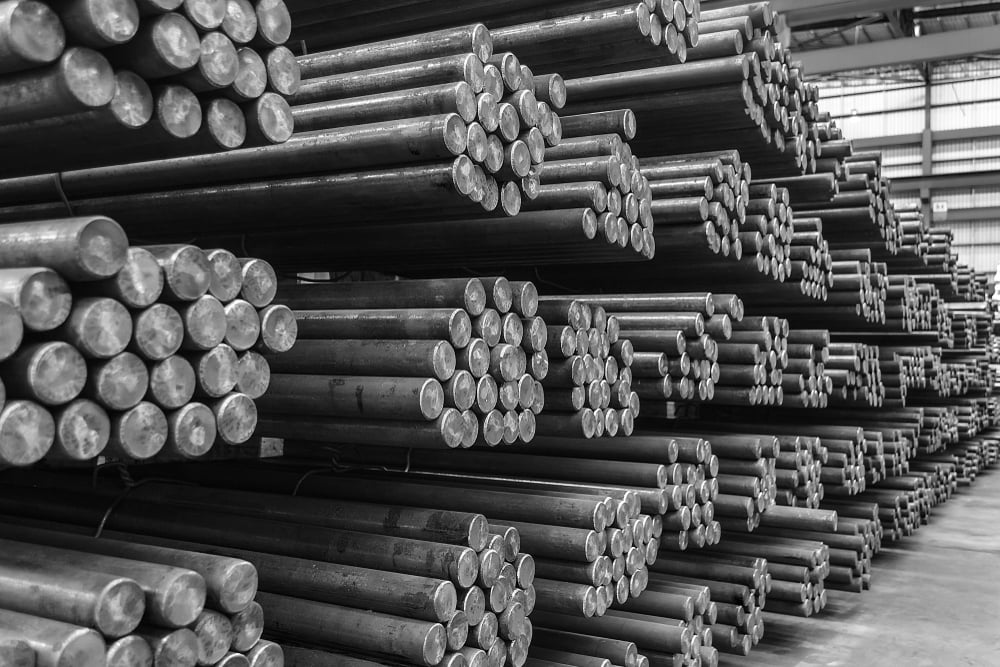
Before comparing Mn13 and Mn18, it is important to understand why high manganese steel is such a popular material for crusher hammer manufacturing.
1.1 Key Advantages of High Manganese Steel
High manganese steel is characterized by:
Excellent work-hardening ability
The surface becomes significantly harder after continuous impact.High toughness
Can absorb very strong impacts without cracking.Strong resistance to deformation
Ideal for heavy-duty crushing environments.Good cost-performance balance
Provides long-term stability and lower replacement frequency.
1.2 Common Alloy Grades
The two most widely used high manganese steel grades for crusher hammer manufacturing are:
Mn13 (Hadfield Steel, ~13% Mn)
Mn18 (High manganese steel, ~18% Mn)
Both alloys have outstanding performance, but they behave differently under impact and abrasion conditions.
2. Chemical Composition Comparison: Mn13 vs. Mn18
The primary difference between Mn13 and Mn18 lies in their manganese content. The additional manganese significantly influences mechanical properties.
| Material | Mn (%) | C (%) | Impact Toughness | Work Hardening Rate |
|---|---|---|---|---|
| Mn13 | 11–14 | 1.1–1.3 | High | Medium |
| Mn18 | 17–19 | 1.2–1.35 | Very high | Excellent |
2.1 Mn13: Standard Work-Hardening Steel
Mn13 contains around 13% manganese and is widely used for general-purpose wear parts. It delivers reliable performance in moderate-impact conditions where the operating environment is not extremely harsh.
2.2 Mn18: Heavy-Duty, High-Impact Steel
Mn18 offers stronger work-hardening capacity and higher toughness, making it suitable for crushers that require:
High impact force
Abrasive input materials
Long working hours
High capacity output
Mn18 is often preferred in mining and aggregate industries where the crusher hammer faces aggressive impact loads.
3. Mechanical Properties Comparison
3.1 Hardness
Both Mn13 and Mn18 are initially soft (HB 180–230) before work hardening. During operation:
Mn13 hardness increases to ~HB 450
Mn18 hardness can increase to ~HB 500–550
This means Mn18 can achieve a significantly harder surface under impact conditions.
3.2 Impact Resistance
Mn13: Good
Mn18: Superior — less prone to cracking or chipping under heavy blows.
3.3 Wear Resistance
Mn13: Suitable for medium wear
Mn18: More wear-resistant, especially under continuous heavy impact.
3.4 Work Hardening Performance
Mn18 has a faster and deeper work-hardening response, resulting in longer service life in demanding environments.
4. When Should You Choose Mn13 Steel Hammers?
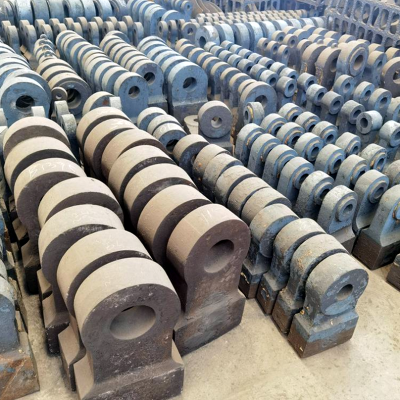
Mn13 is ideal for applications where the wear mechanism is moderate and the material you are crushing is not extremely hard.
4.1 Recommended Working Conditions for Mn13
Raw materials with low to medium hardness
Occasional impact but not constant high-force impact
Moderate crusher speed
Environments where the crusher hammer can achieve work-hardening through normal operation
Users who prioritize cost-effectiveness over extreme durability
4.2 Industries That Commonly Use Mn13
Cement plants (soft limestone)
Brick plants
Coal crushing lines
Clay and shale crushing
Recycled materials with low abrasiveness
4.3 Advantages of Choosing Mn13
Lower cost compared to Mn18
Adequate performance for general applications
Good toughness and acceptable wear resistance
Effective in non-extreme crushing conditions
4.4 When Mn13 Is NOT Suitable
Mn13 may not be the best choice if:
The crusher handles very hard stones (granite, basalt)
Productivity is high (heavy impact per minute)
The hammer experiences constant high pressure
The customer expects longer wear life under rough conditions
If any of these apply, Mn18 provides better performance.
5. When Should You Choose Mn18 Steel Hammers?
Mn18 is designed for aggressive, continuous, and high-impact environments.
5.1 Recommended Working Conditions for Mn18
Crushing hard and abrasive materials
(granite, basalt, quartz, iron ores)High-speed hammer crushers
High-capacity production lines
Continuous impact and heavy wear
Applications where extended lifetime is required
5.2 Industries That Prefer Mn18
Mining (iron ore, copper ore, gold ore)
Quarrying (hard stone)
Aggregate production
Power plants (clinker crushers)
Metallurgy
5.3 Advantages of Mn18 Steel crusher Hammers
Much longer service life under heavy impact
More resistant to deformation and breakage
Fast work-hardening even under short cycles
Can handle severe crushing environments
Less downtime and fewer replacements
5.4 When Mn18 Is Not Necessary
Mn18 may be overkill in environments where:
The material is soft
Impact strength is low
Production is not continuous
In such cases, Mn13 offers better cost-performance.
6. Cost Performance: Mn13 vs. Mn18
Although Mn18 has better wear resistance and toughness, Mn13 can still save costs in moderate working conditions.
6.1 Cost Differences
Mn18 is typically 10–25% more expensive than Mn13 depending on market prices.
However, Mn18 may last 1.5–3 times longer under severe impact conditions.
6.2 Which Material Has the Better ROI?
Choose Mn13 if:
Material is soft
Wear is moderate
Budget is limited
Cost-performance is the priority
Choose Mn18 if:
Productivity and uptime matter most
Materials are hard or highly abrasive
The crusher hammer works under high impact load
Reducing downtime saves money
7. Mn13 vs. Mn18: Summary Comparison Table
| Feature | Mn13 | Mn18 |
|---|---|---|
| Manganese content | ~13% | ~18% |
| Work hardening rate | Good | Excellent |
| Wear resistance | Medium | High |
| Impact toughness | High | Very high |
| Recommended for | Medium impact | Heavy impact |
| Cost | Lower | Higher |
| Typical industries | Cement, coal | Mining, quarry |
| Expected service life | Normal | Long |
8. How to Match Mn13 or Mn18 Crusher Hammers to Your Crusher Type
Choosing the right manganese grade is not only about material hardness or impact strength—it also depends on the specific crusher setup you use. Different crusher designs apply different stress patterns to the hammer, and your choice should match these operating mechanics.
8.1 For Hammer Crushers
Hammer crushers generate repeated high-speed impacts, making crusher hammer durability essential.
Mn13
Works well for softer stones and materials that cause moderate impact.
Best for coal, limestone, clay, gypsum.Mn18
Recommended for high-impact crushing of hard stones.
Best for granite, basalt, quartz, and ores.
Mn18 handles violent impacts without cracking or deforming.
Recommendation:
If your hammer crusher runs above 1200–1500 rpm or handles mixed hard materials, always choose Mn18.
8.2 For Impact Crushers
Impact crushers produce very high localized impact forces on the wear parts. The hammer (blow bar) must withstand both impact and abrasion.
Mn13 performs well only in low-impact applications.
Mn18 is better for medium to high-impact operations.
For extremely abrasive conditions, consider upgrading to materials like high chrome blow bars, but these are not suitable for very high impact.
Recommendation:
For impact crushers, Mn18 is usually the default material unless the working conditions are very soft.
8.3 For Clinker Crushers
In cement plants, clinker crushers face:
Continuous impacts
High temperature
Very abrasive clinker lumps
Mn18 performs much better under these conditions:
Greater thermal stability
Less risk of cracking at high temperature
Longer service cycle
Mn13 is typically only used if the clinker is soft and friable.
9. How Work Hardening Affects Mn13 and Mn18 Performance
The biggest strength of high manganese steel is its work-hardening ability. Both Mn13 and Mn18 become significantly harder during operation.
How It Works
The crusher hammer face receives impact from the stone.
The impact compresses the surface layer.
The crystalline structure transforms from austenite to martensite, which is extremely hard.
The inside remains ductile, preventing the crusher hammer from breaking.
Key Differences
Mn13 work-hardens slower and to a lower hardness.
Mn18 work-hardens faster and can reach ~HB 550 or higher.
This means that if your crusher does not deliver enough impact force, Mn18 will not fully harden, and you won’t get its full benefit.
This is why Mn13 is better for low-impact crushers.
10. Common Mistakes When Selecting Mn13 or Mn18 Crusher Hammers
Many customers select materials based on price alone, which often leads to poor hammer performance.
Below are common mistakes and how to avoid them.
10.1 Choosing Mn18 for Soft Material
If the material is soft (coal, shale, limestone), Mn18 may not achieve proper work hardening, resulting in:
Faster wear
Wasted cost
Lower crushing efficiency
Mn13 is the better choice for soft materials.
10.2 Choosing Mn13 for Hard Material
Mn13 can crack or deform in:
Hard stone crushing
High-speed crushing
High-capacity production lines
Mn18 gives much better durability and overall stability.
10.3 Not Considering Crusher Speed
High RPM = stronger impact = Mn18 needed
Low RPM = weaker impact = Mn13 adequate
10.4 Ignoring Abrasion Level
If abrasion is high, Mn18’s deeper hardening layer provides much longer service life.
11. Case Comparison: Mn13 vs. Mn18 in Real Applications
To illustrate the differences more clearly, here are practical examples.
Case 1: Limestone Crushing (Cement Plant)
Material hardness: Soft
Crusher speed: Medium
Required durability: Moderate
Recommended: Mn13
Reason: Mn13 provides ideal work hardening and costs less.
Actual result:
Mn13 crusher hammer lasted 2–3 months. Mn18 lasted the same time but cost more.
Case 2: Granite Quarry (Mining)
Material hardness: Very hard
Crusher speed: High (1500–1800 rpm)
Recommended: Mn18
Reason: Strong impact + abrasion require high toughness.
Actual result:
Mn18 lasted 3× longer than Mn13.
Case 3: Clinker Crusher (Cement Plant)
Material hardness: Hard, abrasive
Temperature: High
Recommended: Mn18
Reason: Better thermal resistance and cracking resistance.
12. How Econe Wear Parts Manufactures High Performance Mn13 & Mn18 Crusher Hammers
As a professional manufacturer of crusher wear parts, Econe Wear Parts produces Mn13 and Mn18 hammers through strict quality control and optimized heat treatment processes.
12.1 Premium Raw Material Selection
We only use high-quality manganese steel from certified suppliers to ensure:
Stable chemical composition
High purity
Consistent mechanical properties
12.2 High-Precision Casting
Econe Wear Parts ensures:
Uniform microstructure
No shrinkage cavities
High density
Excellent surface finish
This results in crusher hammers that resist cracking and breakage even under extreme load.
12.3 Advanced Heat Treatment Process
Heat treatment determines 60% of a hammer’s final performance.
Our process includes:
Solution treatment
Water quenching
Controlled cooling
This guarantees:
Maximum toughness
Ideal grain structure
Excellent work-hardening behavior
12.4 Customized Crusher Hammer Designs
Econe Wear Parts offers customizations:
Weight and shape optimization
Wear-enhanced design (ribs, grooves)
Customized hole and key dimensions
Special manganese alloy formulations
This helps customers achieve:
Higher crushing efficiency
Longer wear life
Reduced maintenance time
13. How to Choose the Right Grade: Mn13 vs. Mn18 (Checklist)
Use the following quick checklist:
Choose Mn13 if:
Material is soft (coal, limestone, gypsum)
Impact is moderate
Crusher speed is low or medium
Cost-effectiveness is your priority
Work hardening is achievable under moderate load
Choose Mn18 if:
Material is very hard
Abrasion is heavy
Crusher speed is high
High productivity is required
Impact force is strong
You want maximum service life
14. Why Work With Econe Wear Parts?
Choosing the right crusher hammer material is only part of the solution. Working with a reliable supplier ensures consistent quality and long-term savings.
Econe Wear Parts advantages include:
✔ Professional Manufacturer
Years of experience supplying crusher wear parts globally.
✔ Complete Material Options
Mn13, Mn18, Mn22 and customized alloy options.
✔ Cost-Effective Prices
Factory-direct pricing with excellent product lifespan.
✔ Stable Quality
Strict inspection from raw material to final product.
✔ Custom Design Support
We help you choose the right material and design based on real application data.
15. Conclusion
Selecting the right manganese grade—Mn13 or Mn18—is essential for optimizing crusher performance, reducing downtime, and increasing wear life. Each material has specific advantages:
Use Mn13 for soft materials and moderate impact.
Use Mn18 for hard, abrasive, high-impact crushing environments.
By understanding your material type, crusher speed, impact force, and abrasion level, you can confidently choose the right crusher hammer grade and significantly improve your operational efficiency.
If you need professional assistance or high-quality high manganese steel crusher hammers, Econe Wear Parts is ready to support you with reliable products and expert advice.
Email: [john@crusherwearpartspro.com]
WhatsApp: [+86-15057941949]
Website: https://crusherwearpartspro.com/
Get In Touch – Let’s optimize your crushing performance together!