3. How Material Hardness Affects Blow Bar Performance
Material hardness is one of the most critical factors in impact crusher blow bar performance. Harder materials wear longer but are more brittle; tougher materials resist cracking but wear faster.
Below is a simple comparison:
| Material Type | Hardness | Toughness | Wear Resistance | Impact Resistance |
|---|
| Manganese | Low | Very High | Low | Very High |
| High Chrome | Very High | Low | Very High | Low |
| Martensitic | Medium | Medium | Medium | Medium |
| Ceramic Insert | Extremely High | Medium | Extremely High | Low–Medium |
General Rule:
Your choice must match your crusher’s operation environment.
4. Blow Bar Selection Based on Crushing Application
The right blow bar material depends heavily on the type of material you are crushing.
Below is a detailed guide:
4.1 For Soft Stone (Limestone, Coal, Gypsum)
Best Choice:
Reason:
Soft stone causes more abrasion than impact; high chrome gives longer service life.
4.2 For Medium-Hard Stone (Granite, River Rock, Slag)
Best Choice:
Martensitic Blow Bars
Manganese Blow Bars
Reason:
Balanced toughness and wear resistance are required.
4.3 For Hard Stone (Basalt, Quartz, Granite with High Impact)
Best Choice:
Reason:
High impact force requires extreme toughness.
4.4 For Concrete and Asphalt Recycling
Best Choice:
Reason:
Recycled materials contain steel, rebar, and contaminants that accelerate wear.
4.5 For Mixed Application (Stone + Concrete)
Best Choice:
Reason:
Mixed materials require both impact resistance and wear resistance.
5. How Crusher Speed and Rotor Type Affect Blow Bar Selection
Two technical factors significantly influence blow bar performance:
5.1 Rotor Speed (RPM)
High RPM = higher impact force
Low RPM = lower impact force
High RPM (1200–1800 rpm)
→ Choose manganese or martensitic blow bars
Low–Medium RPM (700–1200 rpm)
→ High chrome blow bars perform well
5.2 Rotor Design
Open Rotor
Enclosed Rotor
6. Blow Bar Shape and Design: What You Should Know
Aside from material, blow bar design also affects performance.
Common blow bar designs include:
6.1 Standard Blow Bars
General-purpose design
Used in most applications
6.2 Stepped Blow Bars
Ideal for high-abrasion stone.
6.3 Thickened Blow Bars
6.4 Reversible Blow Bars
 Econe Wear Parts offers all of the above blow bar types and can customize special designs based on specific crusher models, raw materials, and output requirements.
7. Signs You Are Using the Wrong Blow Bars
Using the wrong blow bar type can cause major operational problems.
Here are warning signs:
Blow bars wearing too quickly
→ Material too soft → switch to high chrome or ceramic
Blow bars breaking or cracking
→ Material too brittle → switch to martensitic or manganese
Uneven wear patterns
→ Wrong blow bar design or wrong rotor speed
Poor product size or shape
→ Incorrect blow bar thickness or lack of work hardening
Correcting these issues can increase productivity by 20–40%.
8. How to Match Blow Bar Material with Your Working Conditions
Choosing the right crusher blow bar is not only about understanding the materials but also about accurately matching them with real-world working conditions. Even the strongest high-chrome alloy blow bar may fail early if used under the wrong environment.
Below is a practical matching guide:
✔ Hard, Abrasive Feed Materials (Granite, Basalt, Hard Limestone)
Best choice: High Chrome Blow Bars
Excellent wear resistance
Longest service life under abrasive conditions
Offers outstanding cost reduction in long-term operations
Avoid: Pure manganese blow bars, which will deform quickly under high abrasion.
✔ Soft to Medium-Hard, Non-Abrasive Materials (Limestone, Coal, Gypsum)
Best choice: Manganese (Mn13, Mn18) Blow Bars
Notes:
If oversized feed frequently enters the crusher, manganese is safer than chrome.
✔ Moderate Abrasion + High Impact (Recycling, Demolition, Concrete with Rebar)
Best choice: Martensitic Blow Bars with Ceramic Inserts
Good toughness + good wear resistance
Ceramic inserts significantly extend lifetime
Suitable for changing feed materials
Why:
100% chromium blow bars may crack on heavy impact; manganese may wear out too quickly. Ceramic gives balance.
✔ Extreme Abrasion + Limited Impact (Asphalt Recycling, River Gravel)
Best choice: Ceramic High Chrome Blow Bars
Highest abrasion resistance among all materials
Very long life in abrasive, stable conditions
High cost but excellent overall performance
9. How Blow Bar Shape and Profile Affect Crusher Output
Many buyers focus solely on material selection and ignore blow bar geometry. However, the shape and profile of the blow bar significantly influence crushing efficiency, product size, and operating cost.
Here are the key profiles:
● Standard Blow Bar Profile
Balanced wear
Suitable for general crushing
Ideal for limestone, concrete, mixed aggregates
● Thick Blow Bar with Large Impact Surface
● Stepped Blow Bar Profile
Better penetration into feed materials
Improves crusher throughput
Used in high-production applications
● Reversible Blow Bars
● Wide Tip / Narrow Tip Blow Bars
Correct crusher blow bar shape selection has a direct effect on:
When in doubt, professional suppliers such as Econe Wear Parts can provide engineering guidance based on your crusher model and feed conditions.
10. How Crusher Blow Bar Design Influences Wear Pattern
Wear patterns help you diagnose operational issues:
🔍 1. Center Wear
Cause: Steady feed distribution
Solution: Use standard blow bar or stepped design
🔍 2. Edge Wear
Cause: Misaligned rotor or improper feed direction
Solution: Switch to thicker-edge blow bars
🔍 3. Uneven Wear (One Side Faster)
Cause: Side feeding or poorly controlled material flow
Solution: Adjust the feeding system or use reversible blow bars
🔍 4. Rapid Wear on All Sides
Cause: Material too abrasive for current blow bar
Solution: Upgrade to high chrome or ceramic blow bars
11. Impact Crusher Blow Bar Maintenance: How to Extend Service Life
Even the highest-quality blow bars can fail early if not maintained correctly. Below are best practices:
✔ 1. Ensure a Continuous and Even Material Feed
✔ 2. Control Feed Size
✔ 3. Maintain Correct Rotor Speed
Too high: increases wear
Too low: reduces crushing efficiency
✔ 4. Regularly Rotate or Flip Blow Bars
✔ 5. Check Curtain Liners and Side Liners
Worn liners accelerate blow bar wear because materials reflect improperly.
✔ 6. Install Ceramic Blow Bars for Extreme Wear
12. The True Cost of Blow Bars — Not Only the Purchase Price
Many customers mistakenly compare only the price of blow bars. But the true cost includes:
1. Wear Life (Total Hours Used)
Doubling lifespan often means far lower total cost, even if higher purchase price.
2. Downtime Cost
Replacing blow bars takes hours → every hour lost = lost production.
3. Labor & Maintenance Cost
Fewer replacements mean reduced manpower and fewer safety risks.
4. Final Product Quality
Good blow bars maintain stable output size, reducing secondary crushing costs.
This is why experienced buyers worldwide choose reliable suppliers like Econe Wear Parts, who focus on consistent material quality and stable performance.
13. How to Choose a Reliable Crusher Blow Bar Supplier
Not all suppliers are the same. A good supplier can significantly extend the working life of your blow bars.
✔ A Reliable Supplier Should Provide:
1. Strict Material Control
2. Accurate Machining and Tolerance Control
Rotor fit accuracy
Balanced weight
Smooth impact surface
3. Compatibility with Major Crusher Brands
Such as:
Metso
Sandvik
Kleemann
Hazemag
Powerscreen
Terex
Rubble Master
4. Custom Solutions
5. Fast Delivery and Stable Supply
Crusher downtime is expensive — a dependable supplier must ensure quick dispatch.
14. Why Many Global Buyers Prefer Econe Wear Parts
Below are the reasons why more international quarry, mining, and recycling customers choose Econe Wear Parts as a long-term partner:
✔ 1. Full Material Solutions (Mn13, Mn18, High Chrome, Martensitic, Ceramic)
A complete blow bar selection ensures customers get the best match for their conditions.
✔ 2. Professional Casting Technology
Ensures stable mechanical properties.
✔ 3. OEM-Level Tolerance Control
Ensures perfect fit on rotor assembly—reducing vibration and wear.
✔ 4. Customizable Ceramic Insert Designs
Tailored for extremely abrasive conditions.
✔ 5. Competitive Factory Prices
Direct manufacturer → no middleman → better pricing.
✔ 6. Long-Term After-Sales Technical Support
Helps customers improve crusher performance and reduce operating cost.
15. Final Recommendations: How to Choose the Best Blow Bar for Your Impact Crusher
To summarize, choosing the best crusher blow bar requires considering:
✔ Feed hardness and abrasiveness
Hard = chrome/ceramic
Soft = manganese
✔ Impact level of your working environment
High impact = manganese
Low impact = chrome
✔ Crusher type and rotor speed
Different models → different suitable profiles
✔ Desired product size and capacity
Profile shape affects particle size distribution
✔ Total cost, not just the unit price
Longer life = lower real cost
Conclusion
Selecting the best blow bars for your impact crusher requires a deep understanding of materials, shapes, operational conditions, and supplier capabilities. A well-chosen blow bar can:
If you want stable quality, accurate casting dimensions, and optimized material solutions, Econe Wear Parts is a trusted manufacturer offering professional crusher blow bar solutions for quarries, mines, and recycling plants worldwide.

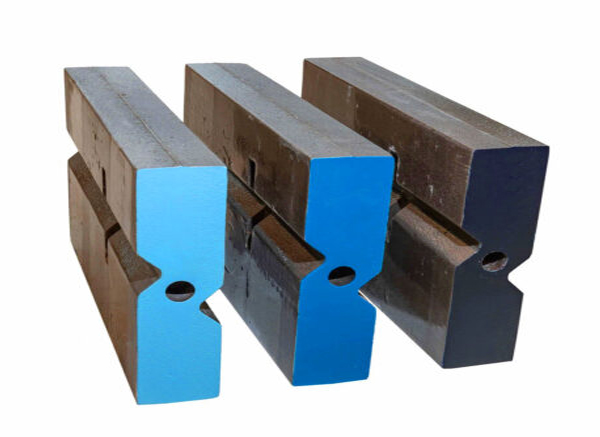
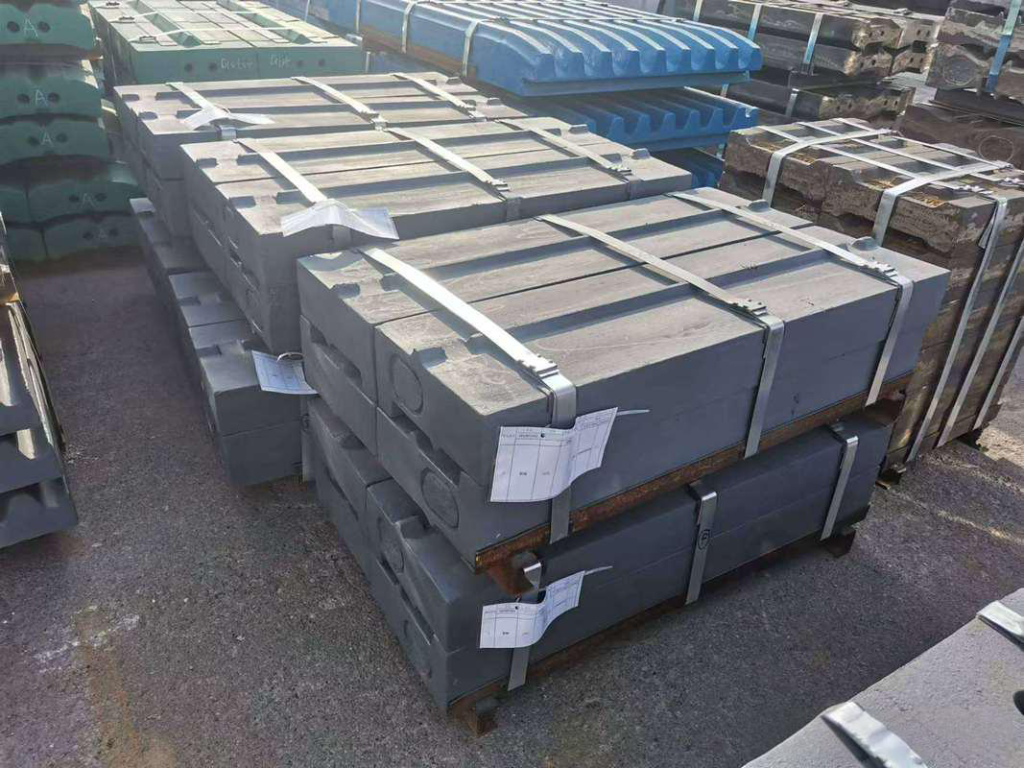
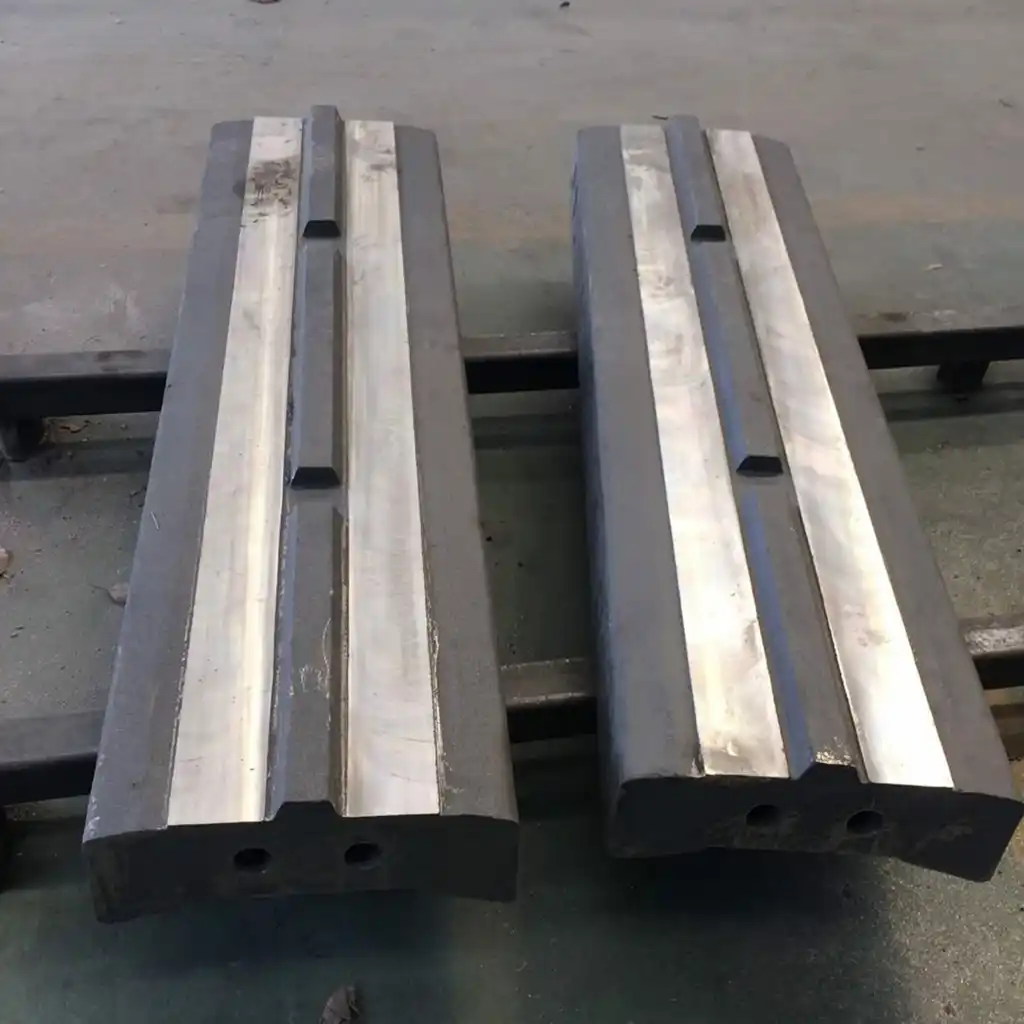
 Econe Wear Parts offers all of the above blow bar types and can customize special designs based on specific crusher models, raw materials, and output requirements.
 Blow bars wearing too quickly