How Heat Treatment Affects Crusher Hammer Durability

INTRODUCTION
In the world of heavy-duty industrial crushing—mining, cement, aggregates, and recycling—the performance of crusher wear parts is a decisive factor for operational efficiency and maintenance costs. Among these critical components, the crusher hammer plays a central role. It directly impacts the crushing output, wear rate, and equipment downtime.
However, what many operators overlook is that heat treatment—the process of controlled heating and cooling of metal—can make the difference between a hammer that lasts a few days and one that lasts for months.
Proper heat treatment improves hardness, impact resistance, and wear life, while poor heat treatment can cause cracking, premature wear, or deformation. In this article, we’ll explore how heat treatment affects the durability of crusher hammers, what techniques are commonly used, and how to choose the right material–process combination for your crushing plant.
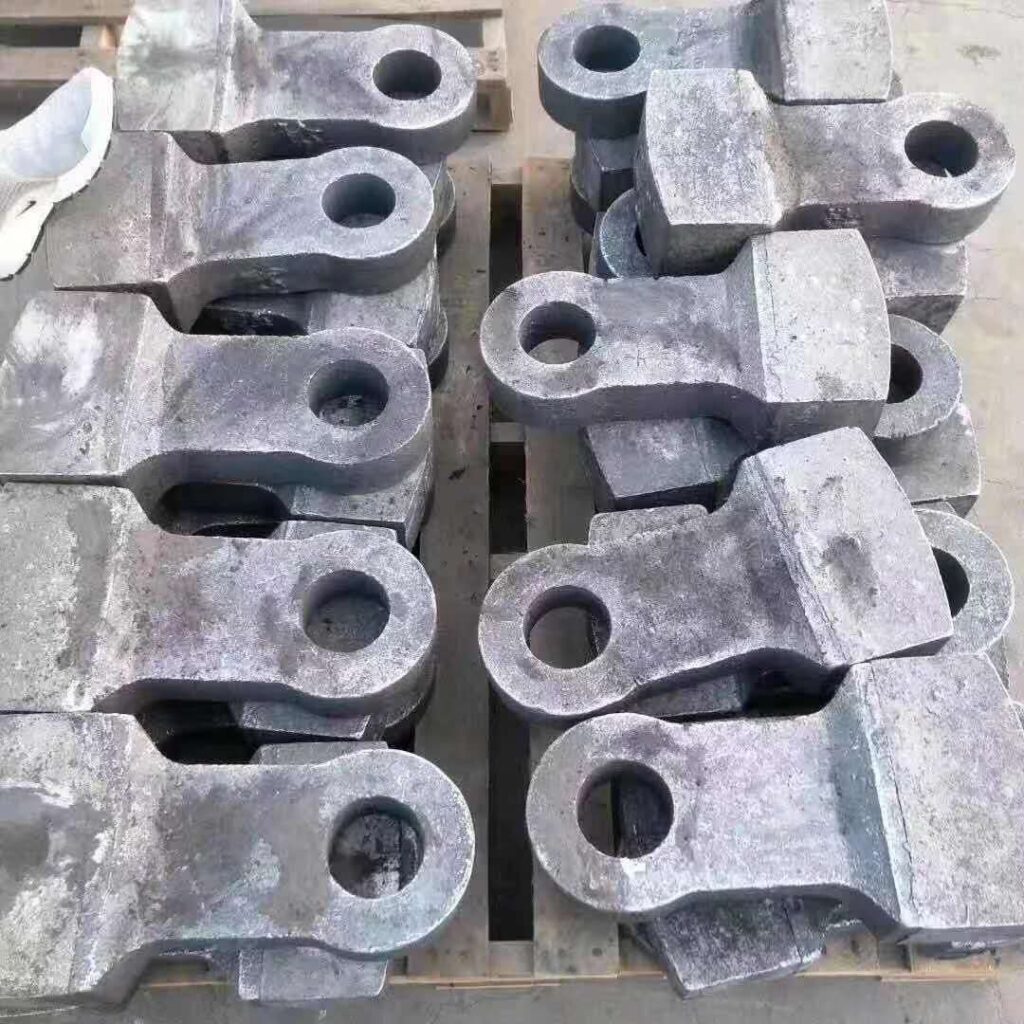
⚙️ 1. Understanding Crusher Hammer Function and Wear Mechanism
Before discussing heat treatment, it’s important to understand how a crusher hammer works and why it wears out.
Crusher hammers are typically used in impact crushers, hammer crushers, and clinker crushers. These hammers strike the raw material with tremendous force, shattering it into smaller fragments. The material type (e.g., limestone, coal, clinker, iron ore) determines the wear pattern and the stresses acting on the hammer surface.
Common wear mechanisms include:
Impact fatigue: Repeated high-energy impacts that gradually weaken the hammer.
Abrasive wear: Continuous contact with hard minerals or impurities.
Thermal fatigue: High temperatures cause microstructural changes and cracks.
Corrosion: In wet or chemical environments.
To combat these, manufacturers rely on optimized material selection and heat treatment processes to balance toughness and hardness.
🔩 2. The Role of Heat Treatment in Crusher Hammer Manufacturing
Heat treatment is not merely a finishing step—it defines the mechanical behavior of the entire hammer. The goal is to achieve an ideal balance between surface hardness (for wear resistance) and core toughness (for impact absorption).
A properly heat-treated hammer:
✅ Has high hardness on the surface (resisting wear).
✅ Retains a tough core that prevents brittleness.
✅ Minimizes internal stress and cracking.
✅ Exhibits stable performance under high temperatures.
Without proper heat treatment, even high-quality alloy steel can fail prematurely due to internal stress or soft microstructure.

🔥 3. Common Materials Used for Crusher Hammers
Different materials respond uniquely to heat treatment. The most common alloys include:
| Material Type | Main Features | Common Heat Treatment Methods |
|---|---|---|
| High Manganese Steel (Mn13, Mn18) | High toughness, work-hardening ability | Solution treatment + water quenching |
| High Chromium Cast Iron (Cr15, Cr26) | Excellent hardness and wear resistance | Quenching + tempering |
| Alloy Steel (Cr-Mo, Ni-Cr-Mo) | Balanced strength and impact resistance | Normalizing + quenching + tempering |
| Bimetal Composite Hammer | Tough steel base + hard alloy layer | Differential heat treatment |
Selecting the right material is only half the battle—the success depends on how heat treatment optimizes its internal structure.
👉 Econe is a professional crusher wear parts manufacturer with years of experience producing high-quality crusher hammers, jaw plates, and other wear-resistant components. By using precise heat treatment processes and premium alloy steels, Econe ensures every crusher hammer achieves excellent impact resistance and long service life — helping customers reduce maintenance costs and maximize production uptime.
🧪 4. Key Heat Treatment Processes Explained
Let’s look at the major heat treatment processes used in crusher hammer production:
(1) Annealing
Purpose: To relieve internal stress and soften the material.
Process: Slow heating to a specific temperature, then controlled cooling.
Effect: Improves machinability and uniform structure before further treatment.
(2) Normalizing
Purpose: Refines the grain structure and increases toughness.
Process: Heating above critical temperature followed by air cooling.
Effect: Improves uniformity of hardness and prepares material for quenching.
(3) Quenching
Purpose: To increase hardness and wear resistance.
Process: Heating to high temperature (austenitizing) and rapidly cooling (usually in water or oil).
Effect: Produces a hard but brittle martensitic structure—requires tempering afterward.
(4) Tempering
Purpose: To reduce brittleness from quenching and improve toughness.
Process: Reheating to a lower temperature, then cooling in air.
Effect: Produces a strong and ductile hammer with optimal performance.
(5) Solution Treatment (for Manganese Steel)
Purpose: Dissolves carbides into austenite and refines the structure.
Process: Heating to 1050–1100°C, followed by rapid water quenching.
Effect: Activates work-hardening properties—hammer becomes tougher during crushing.
Each process must be precisely controlled. Even small deviations in temperature or cooling rate can drastically affect wear life and crack resistance.
🧠 5. Microstructure Evolution and Its Impact
Heat treatment fundamentally changes the microstructure of the metal, which determines the hammer’s mechanical behavior.
| Microstructure | Formed By | Key Property |
|---|---|---|
| Ferrite | Low carbon, soft phase | Ductile but low strength |
| Pearlite | Controlled cooling | Balance between hardness and toughness |
| Martensite | Rapid quenching | High hardness but brittle |
| Austenite | High-temperature phase | Good toughness and work-hardening |
| Carbides | High chromium alloys | Extreme wear resistance but brittle |
For crusher hammers, a combination of martensite and retained austenite often delivers the best results—hard surface, tough interior.
If the microstructure is too soft (too much ferrite), wear life decreases. If it’s too brittle (excess martensite), cracking occurs. Hence, fine-tuning heat treatment parameters is critical to finding the perfect balance.
🏭 6. Real-World Example: How Heat Treatment Extends Hammer Life
A cement plant using standard high-manganese hammers found their parts lasted only 10 days due to premature cracking. After switching to a supplier who applied optimized heat treatment—solution at 1080°C followed by rapid quenching—the lifespan extended to over 30 days.
Another case in a limestone quarry: Alloy steel hammers treated with triple tempering achieved 40% higher wear resistance than single-tempered versions.
These examples prove that even with the same alloy, heat treatment precision can triple the service life.
🔍 7. Common Heat Treatment Defects and Their Causes
Poor control in heat treatment can ruin the hammer’s structure. Below are frequent problems and how to avoid them:
| Defect | Cause | Prevention |
|---|---|---|
| Cracking | Rapid quenching or uneven cooling | Use oil quenching or preheat uniformly |
| Soft spots | Incomplete hardening | Maintain uniform furnace temperature |
| Warping | Uneven heating | Rotate parts during heating and cooling |
| Overheating | Too high temperature | Calibrate thermocouples and avoid oxidation |
| Decarburization | Carbon loss on surface | Use protective atmosphere during heating |
High-quality manufacturers use computer-controlled furnaces and temperature monitoring systems to ensure every hammer is heat-treated uniformly.
🧰 8. The Link Between Heat Treatment and Cost Efficiency
Crusher hammers are consumable parts, and their replacement cost (including downtime) often exceeds the purchase price itself. Heat treatment directly affects the total cost of ownership (TCO).
Key cost benefits of optimized heat treatment:
🔹 Longer wear life → fewer replacements
🔹 Stable performance → consistent output quality
🔹 Reduced downtime → higher plant productivity
🔹 Lower maintenance cost → improved ROI
Even a 20% increase in wear life can result in thousands of dollars saved annually for large crushing operations.
⚡ 9. Advanced Heat Treatment Technologies for Crusher Hammers
Modern foundries are adopting new heat treatment technologies to further enhance the durability of crusher hammers. These advanced techniques offer better control over microstructure and surface properties, ensuring consistent performance even in the most demanding conditions.
(1) Vacuum Heat Treatment
Vacuum furnaces remove oxygen and contaminants, allowing precise temperature control and preventing oxidation or decarburization. This process yields clean surfaces and consistent hardness, especially valuable for high-alloy hammers.
Advantages:
Uniform heating and cooling
No surface scaling or carbon loss
High-quality metallurgical structure
Best suited for: High-chromium and Ni-Cr-Mo alloy hammers.
(2) Induction Hardening
Induction hardening selectively hardens the hammer’s impact zone by using electromagnetic fields. The rest of the hammer remains relatively soft, preserving toughness.
Advantages:
Controlled hardening depth
Energy-efficient and precise
Improved resistance at high-impact zones
Best suited for: Alloy steel and bimetal hammers used in impact crushers.
(3) Cryogenic Treatment
In this process, hammers are cooled to sub-zero temperatures (−120°C or lower) after quenching. This transforms retained austenite into martensite, enhancing hardness and wear life.
Advantages:
Improved microstructure stability
Increased resistance to micro-cracking
Extended hammer lifespan
Best suited for: High-chromium or tool-steel-based crusher hammers.
(4) Carburizing and Nitriding
These thermochemical treatments add carbon or nitrogen atoms to the surface layer, increasing surface hardness without affecting the core.
Advantages:
Extreme surface wear resistance
Excellent fatigue strength
Minimal distortion
Best suited for: Smaller hammers and impact tips where surface hardness is crucial.
🧬 10. Heat Treatment and Alloy Synergy: Finding the Ideal Balance
Each material behaves differently under heat treatment. Let’s compare some typical material + process combinations and their impact on performance:
| Material | Heat Treatment Process | Surface Hardness (HRC) | Lifespan Improvement |
|---|---|---|---|
| Mn18 High Manganese Steel | Solution at 1080°C + water quenching | 50–55 | 2.5× |
| Cr26 High Chromium Cast Iron | Quenching + double tempering | 58–63 | 3× |
| Cr-Mo Alloy Steel | Normalizing + quenching + tempering | 45–50 | 1.8× |
| Bimetal Hammer (Cr Alloy + Steel Base) | Differential quenching | 60–62 (surface) | 3.5× |
From this comparison, it’s clear that heat treatment is not “one-size-fits-all.” Each hammer type needs a specific temperature curve and cooling method to reach optimal performance.
🏗️ 11. How to Choose the Right Crusher Hammer Supplier
Choosing a supplier who understands the metallurgy and heat treatment balance is critical. Many low-cost suppliers skip key steps in the process, leading to poor hammer durability. When evaluating a supplier, consider the following checklist:
✅ 1. In-house heat treatment capability
Suppliers with their own heat treatment furnaces have better control over quality.
✅ 2. Quality certificates and testing reports
Ask for hardness profiles, microstructure analysis, and heat treatment records.
✅ 3. Material traceability
A reliable supplier tracks every batch of alloy steel and casting lot.
✅ 4. Consistent production process
Computer-controlled furnaces, automatic quenching tanks, and skilled operators make all the difference.
✅ 5. Proven service life data
Trust suppliers who can provide case studies and customer references.
🏭 12. Example: Econe’s Heat Treatment Expertise
One of the trusted names in the industry, Econe is a professional crusher wear parts manufacturer in China with years of experience producing durable and precisely heat-treated components.
Econe’s advanced foundry utilizes high-precision electric furnaces, automated heat treatment lines, and computer-controlled temperature systems to ensure that each hammer achieves optimal hardness and impact resistance.
Their engineering team tailors the heat treatment process for each alloy type—whether it’s high manganese, Cr-Mo alloy steel, or bimetal composite hammers—ensuring maximum lifespan and reliability under tough working conditions.
By combining metallurgical expertise and strict quality inspection, Econe delivers wear parts that help crushers operate longer and more efficiently, minimizing downtime and maintenance costs.
If you’re looking for a reliable crusher wear parts manufacturer, Econe’s consistent product quality and customer support make it a trusted partner for mining, cement, and aggregate plants worldwide.
🔍 13. Case Study: 40% Longer Service Life After Optimized Heat Treatment
A mining company in Southeast Asia faced excessive hammer wear in its limestone crusher. The standard hammers lasted only 12 days. Econe engineers analyzed the wear pattern and found that improper quenching caused surface brittleness and cracking.
After switching to Econe’s vacuum heat-treated high-chromium hammers, service life increased to 17 days (≈40% improvement) without any changes in crusher operation. The plant reported smoother crushing, fewer shutdowns, and reduced total wear part costs by over 25% per year.
This case illustrates that scientific heat treatment—combined with correct alloy selection—directly influences overall production efficiency.
⚙️ 14. Best Practices for Maximizing Hammer Durability
To get the most from your crusher hammers, follow these operational and maintenance tips:
✅ Proper installation
Ensure correct hammer orientation and alignment to reduce uneven impact.
✅ Balanced rotor assembly
Imbalance can cause vibration, leading to premature hammer failure.
✅ Regular inspection
Monitor wear patterns and replace hammers before reaching critical thickness.
✅ Avoid tramp metal
Foreign materials like steel bars can shatter even the hardest hammers.
✅ Maintain consistent feed size
Excessive oversized material increases stress concentration on hammers.
By combining proper maintenance with high-quality heat-treated hammers, you can achieve the longest possible service life and consistent crushing performance.
🌍 15. Future Trends in Crusher Hammer Heat Treatment
As the mining and construction industries demand higher efficiency, wear part manufacturers are investing in smarter, greener, and more precise technologies:
AI-controlled furnaces for automatic temperature regulation
Laser surface hardening for ultra-precise local treatment
Recycling alloy optimization to improve environmental sustainability
Predictive wear monitoring based on microstructure data
These innovations aim to reduce energy consumption, extend hammer life, and deliver more predictable performance across diverse material types.
🧭 16. Conclusion: Heat Treatment Defines Hammer Longevity
In the crushing industry, heat treatment is not optional—it’s essential. It determines how long a crusher hammer can withstand impact, abrasion, and temperature variations.
Manufacturers like Econe have demonstrated that meticulous heat treatment—combining advanced furnace control, proper alloy choice, and rigorous inspection—can double or even triple the service life of crusher hammers.
For plant operators, understanding this process means better supplier selection, lower maintenance costs, and smoother operations.
When you invest in properly heat-treated crusher hammers, you’re not just buying wear parts—you’re investing in long-term performance and productivity.
🔗 Related Resources
Email: [ljj2914@163.com]
WhatsApp: [+86-15057941949]
Website: https://crusherwearpartspro.com/
Get In Touch – Let’s optimize your crushing performance together!